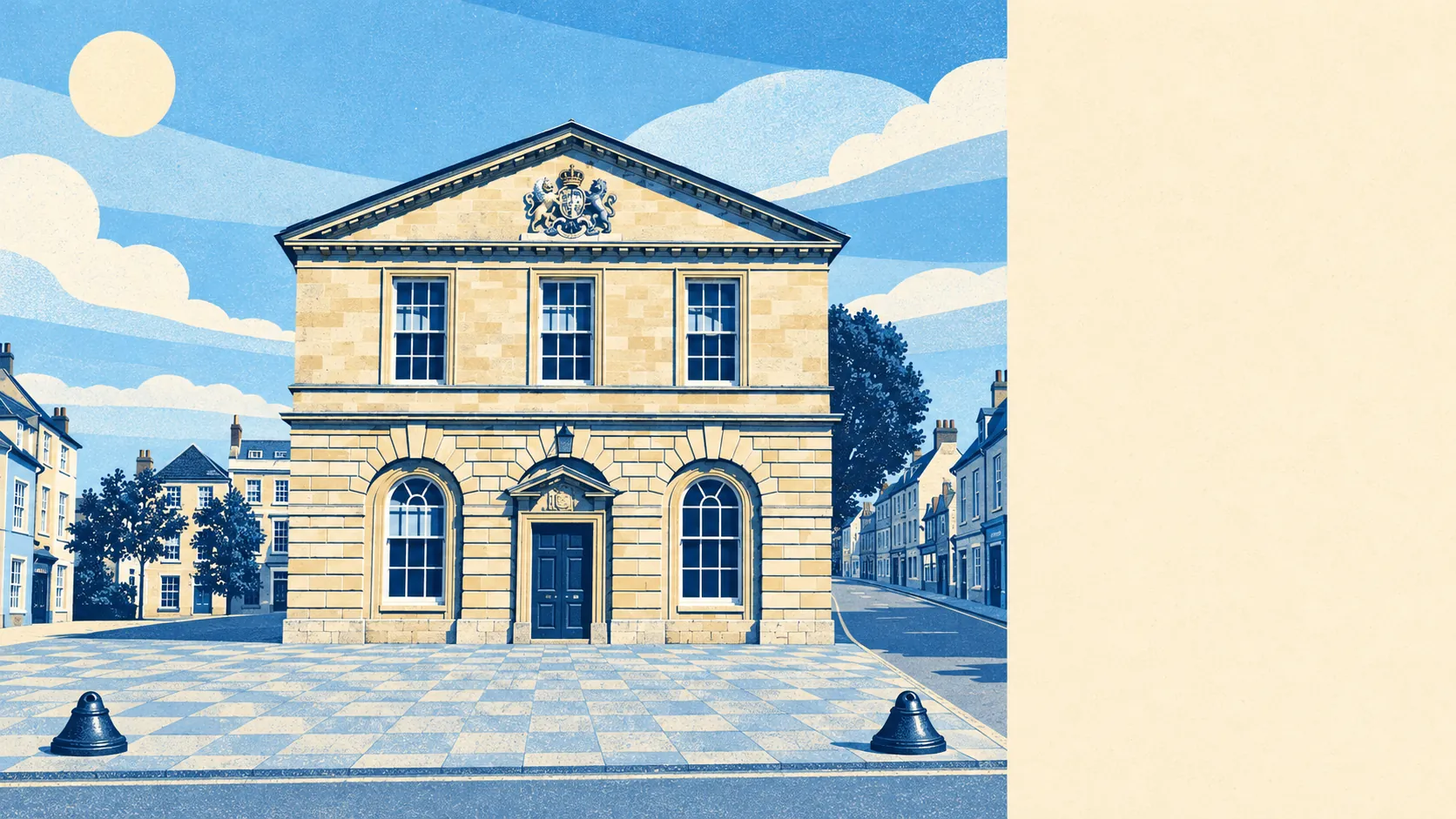
Woodstock is a palace town held together by about two thirds of its households owning the home they live in. That matters to a buyer, because owners stay, and people who stay end up running the place. Blenheim gets the coach parties. The residents get the town council, the school gate and the long memory for who said what at the last meeting.
The town council has a habit of recruiting people with day jobs bigger than the town. Peter Jay, the economist, broadcaster and diplomat, sat as a town councillor and was mayor in 2010. William Fordyce Mavor, teacher, priest and compiler of schoolbooks, was first elected mayor in 1808 and kept coming back to the job, and Mavor Close on the Barn Piece estate in Old Woodstock carries his name. Census 2021 puts owner-occupiers at about 66% of households, and the median resident is 46. The Office for National Statistics models gross household income at about £74,000 for the financial year to March 2023, averaged across the wider statistical area. Put together, that is a grown-up, comfortable town of people with mortgages that are mostly behind them, and the parish newsletter gets read.
On safety, Thames Valley Police recorded about 41 crimes per 1,000 residents in the year to May 2026, roughly 24% below the West Oxfordshire average. The town's most famous detention is still Princess Elizabeth's, held in a lodge here for nearly a year from 1554, and the lodge was used only because Woodstock Palace was too run down to hold her.
Getting anywhere is where Woodstock is weakest. The town had its own station until the last train left on 27 February 1954, and New Road now runs along the old line, so the railway has literally been paved over and lived on. The nearest stations are out of town at Hanborough, Combe, Tackley and Oxford Parkway. At the 2021 Census about 35% of working residents drove to work, about 4% took the bus, under 1% took the train and just under half worked from home, a census that caught plenty of people mid-pandemic. There are 20 bus stops, and the eight with timetable data average about 219 departures a weekday, around 10 an hour at the busiest time. The Department for Transport's 2019 modelling puts the nearest hospital about 29 minutes away by car and 52 minutes by public transport, and the public transport figure ages as services get cut. Broadband is better than the trains. Superfast broadband reaches 100% of premises and gigabit about 74%. A town that built its economy on royal visitors now relies on the visitors bringing their own cars.
The Land Registry's last twelve months, to May 2026, recorded 40 sales at a median of about £538,000. By type, 18 terraced houses went for about £414,000, six semis for about £551,000, ten detached houses for about £883,000 and six flats for about £235,000. With samples that small, one big house in Bladon can drag the median around. The most common council-tax band is D, and bands A and B together cover about 14% of homes. Renting is priced off a wider area. The typical private rent across West Oxfordshire is about £1,270 a month as of April 2026, a district-wide figure from the Office for National Statistics price index, so the town's own lettings could run above or below it.
Every home on the council-tax valuation list counts in the housing stock figures, and they show a mixed town. About 30% of dwellings are terraced, 25% detached, 20% semi-detached, 18% flats and 6% bungalows, and about 24% were built before 1930. Energy certificates rate about 54% of certificated homes C or better and about 13% E or worse. About 76% of homes heat with mains gas, and about 8% rely on electricity alone. The Bear Hotel on Park Street dates from the 13th century, and plenty of its neighbours have been cold for almost as long.
Flood risk is low on the river-and-sea measure. The Environment Agency's river-and-sea flood zones cover 0% of Woodstock's postcodes. The wider postcode indicators, which include surface water, put about 11% of postcodes at high risk on at least one indicator, about 13% at medium and about 26% at low. Most of that is rain with nowhere to drain, and the river has very little to do with it.
Heritage is the price of living in a palace's front garden. Historic England lists 192 buildings here, five of them Grade I and ten Grade II*, and the town is covered by the Woodstock conservation area. Windows, doors, extensions and paint colours on the old streets all go through consent first. Blenheim Palace is the headline listing. The Grade II stone cottage on the High Street will take up more of your weekends.
Outside, the average home is about 131 metres from green space and about 338 metres from water, mostly the River Glyme and the lakes in the park. The old railway's eastern stretch is now the Old Woodstock Line Nature Reserve. The page also covers Bladon, where Churchill is buried, Wootton, Kiddington and Glympton, where the Glympton Park estate owns the village and the church. That is about as far from a buy-to-let street as English property gets.
Woodstock is right for buyers with a car or a home office, a tolerance for coach parties and an interest in turning up to things. People who commute daily by rail, want a modern box with a driveway, or think listed building consent is optional should look elsewhere. The trains left in 1954 and the planning rules never will.
The community is the thing you are buying. Neighbours here own their homes, stay put and serve on the council, so the town is looked after by people who will still be around in twenty years. Transport is the cost: every journey to work, hospital or station starts with a car or a long wait. Woodstock is better than most places for anyone willing to drive. The palace brings the visitors, but the people who live in the town are the reason to move there.