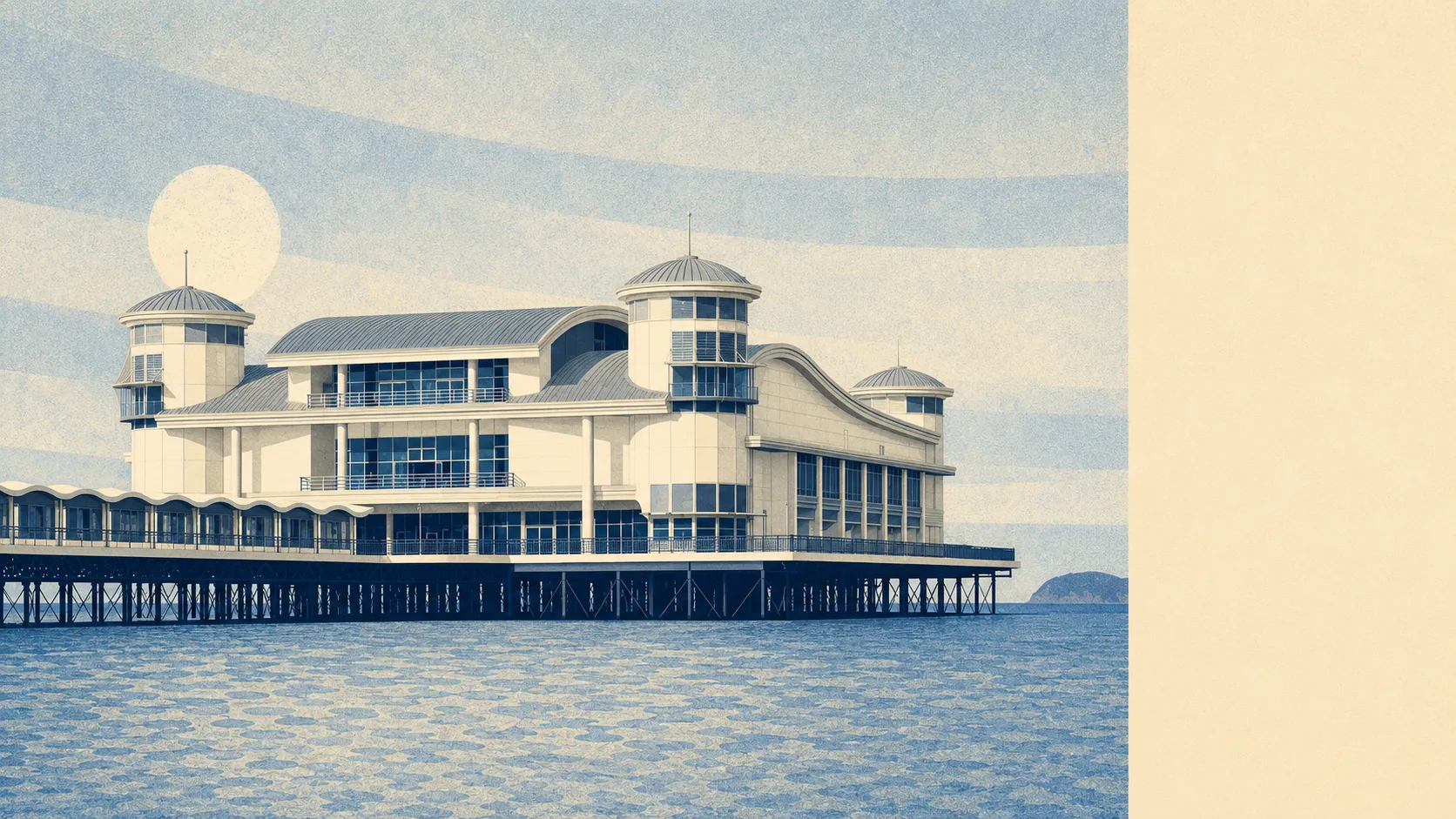
Weston-super-Mare is Bristol's spare bedroom with a mudflat view. About two-thirds of people own their homes. The typical house sells for around £265,000. Two piers on the front, one of them derelict, both running on nostalgia. This is not a resort on the way up. It's a cheaper stretch of coast for people who did the sums and moved out of the city.
The housing is mostly what you'd expect from a town that filled out after the war. Over half the homes are houses, a third are flats, and one in ten is a bungalow, which tells you who's been retiring here. Most of the stock went up between 1950 and the early eighties, with under a quarter dating back before 1930. Just over half the homes reach a decent energy rating of C or better. A third sit at D, and about one in seven are E or worse, which on the seafront terraces means cold rooms and a heating bill that argues with you every winter.
On price, Weston does the one thing seaside towns are good for, which is being affordable. The typical sale over the last year landed around £265,000. A flat goes for about £165,000, a terrace for around £240,000, a semi for £280,000, and a detached house for £375,000. Council tax mostly falls in band B, with almost half of homes in the two cheapest bands. For anyone coming off a Bristol mortgage, those numbers read like a misprint.
Renting is a different story, and the honest figure is a wide one. Typical private rent across the North Somerset area runs at about £1,200 a month. That covers the pricier towns up the coast as well as Weston, so treat it as the ceiling of the range rather than the going rate for a flat behind the front.
Safety is where the brochure goes quiet. The published crime rate is about 119 per thousand people, which sits roughly a third above the North Somerset average. A big seaside town with a busy centre and a summer trade will always outscore the villages around it, and Weston is the busy centre. The number is real. It is also the price of being the place everyone else drives into on a Saturday.
Getting out of town is easier than getting to work by train. Barely one in a hundred residents commute by rail, while over half drive and nearly a quarter now work from home. There are stations at Weston-super-Mare, Worle and Weston Milton, and the line to Bristol exists, but the town was built around the car and still runs on it. Broadband is the quiet win: gigabit lines reach about 85% of the town and near enough everywhere gets superfast, so the working-from-home crowd landed somewhere that could actually carry them.
Then there is the water, and this is the part that decides things. Around half the area sits in the highest flood zone, and roughly one postcode in thirteen carries a high flood risk of its own on top of that. This is a town on a tidal flat behind a sea wall, and the maps do not pretend otherwise. What Weston gives back is space. The average home is under two hundred metres from green space, with around sixteen patches of it within a kilometre, and the edge of the Mendip Hills clips the southern side. You are never far from either a park or a puddle.
If you want to change the house you buy, check what you're buying first. There are getting on for three hundred listed buildings across the area, fifteen of them the top grade, along with ten conservation areas and more than twenty scheduled monuments scattered through the villages. In the old centre and the seafront crescents that means planning consent for the kind of alterations that are nobody's business anywhere else.
The people picture is a settled one. About two-thirds own outright or on a mortgage, the median age is 44, and the typical household income sits near £50,000. This is a town of homeowners easing toward retirement, not a churn of renters passing through, and it behaves like one.
The name covers more than the front. This page takes in Worle, which pre-dates Weston, kept its own identity and may now be the bigger of the two, along with Uphill down by the River Axe, plus Kewstoke, Bleadon, Hutton, Locking, Lympsham, Puxton and Wick St. Lawrence. The edges are quieter, greener and, near the Axe, wetter.
Weston suits the priced-out Bristol commuter who wants sea air and a mortgage that leaves money over, and the pragmatic downsizer who'd rather own a bungalow near a beach than rent a box in the city. Both get exactly what the numbers promise.
It does not suit the buyer chasing a genteel promenade or a comeback story. Weston flirted with the Margate route once, when the Tropicana hosted Dismaland in 2015, and then went back to being itself. It dreams of Clevedon up the coast and lives more like Clacton, and there's no shame in that as long as you wanted honest Bridgwater rather than a postcard.
For a place that lost its holiday trade decades ago, the roll call is better than it should be. John Cleese was a day pupil in the town in 1948 and came back to teach before Monty Python found him. Roald Dahl boarded here as a boy in 1925. Jill Dando, Jeffrey Archer, the astronomer Arthur Stanley Eddington and Ritchie Blackmore all belong to the town in one way or another. The piers made the postcards; the school register did the rest.
So, is it a good place to live? On the whole it's average, and average here is honest. The surroundings and the green space are as good as anywhere on this coast. The flood risk is as bad as it looks, and no sea wall talks you out of reading the search twice. It dreams of Clevedon, settles for honest Bridgwater, and the flood zone settles the rest.