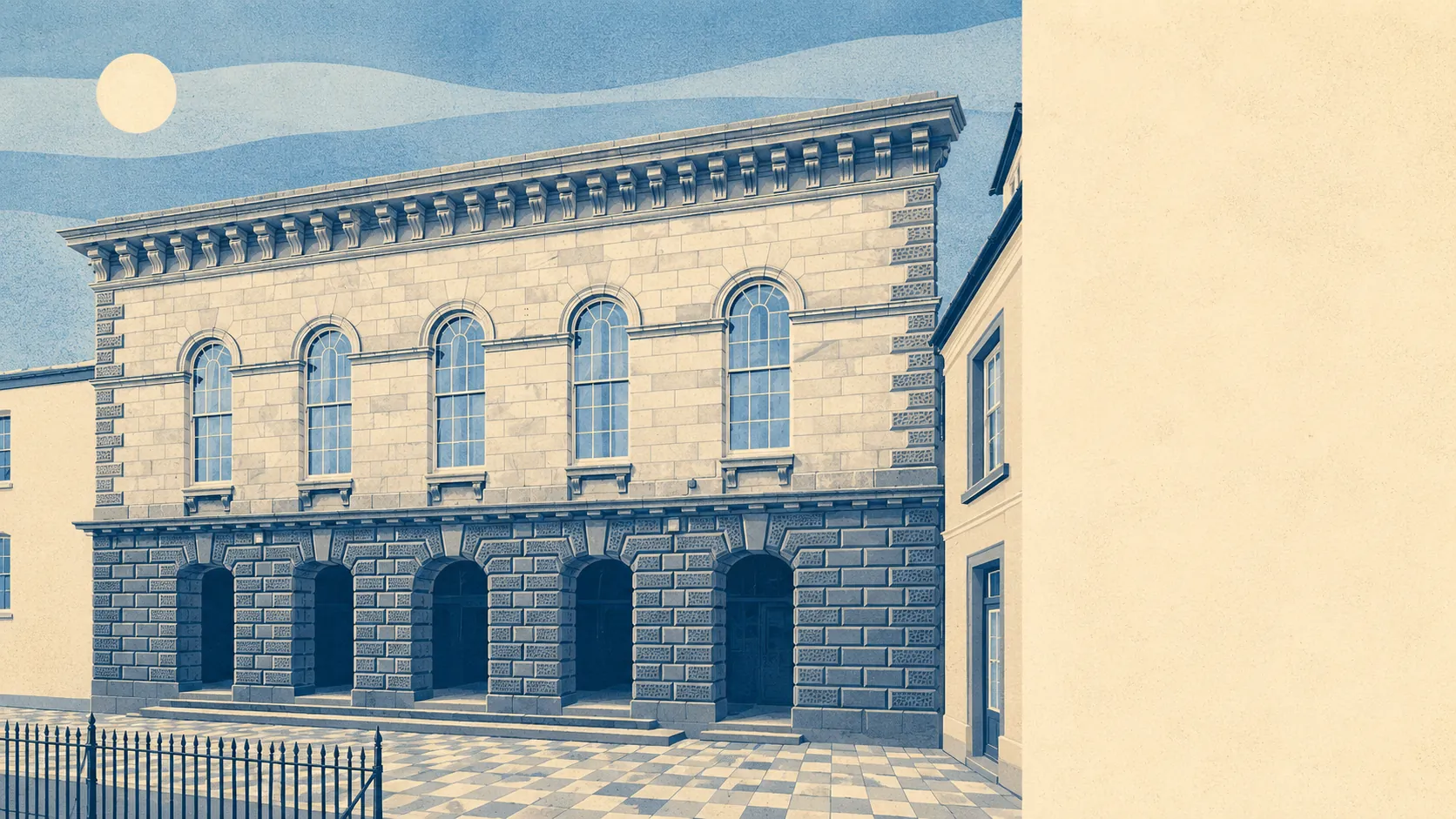
For most houses here, yes. Two conservation areas, and 115 listed buildings across the whole area. Everything else carries no heritage designation at all. What is likelier to complicate the job is not the planning department. It is what somebody dug out from under the garden a century and a half ago.
Historic England lists 115 buildings in the area: one at Grade I, seven at Grade II star and the remaining 107 at Grade II. Listing covers the whole building rather than the pretty side of it, so consent is needed for alterations affecting its character inside as well as out, and that includes work most owners assume is maintenance. If you are buying a listed home, the constraint is permanent and it comes with the deeds rather than with the current council.
There are two conservation areas, at St Austell and at Charlestown. Inside one, the level of control over alterations is tighter than elsewhere and the council can require consent for things that would be automatic a few streets away. Nobody should assume the rules that apply at one end of the town apply at the other. Confirm the designation for the specific address before an architect draws anything.
Four scheduled monuments sit within the area. That is the strictest protection tier in the system, and it matters if your land runs up against one rather than because the town has them at all.
The live evidence is that people alter houses here constantly. Planning records carry 1,327 applications across the area between April 2024 and June 2026, with 584 of them lodged in the last twelve months. That is a town where extensions, conversions and dormers are ordinary business rather than a fight with the establishment.
The ground is the genuinely local complication. About 85% of postcodes have a recorded abandoned mine nearby, and 236 postcodes sit directly over recorded workings. None of it is coalfield, so this is the tin and china clay legacy rather than the one the coal authority searches cover. In practice that means a mining search on purchase, sometimes a specialist report on top of it, and occasionally a lender or insurer wanting more detail before they commit. It does not mean the house is sinking. It means the paperwork asks a question here that it would not ask in most of England, and building work is exactly the moment that question gets asked properly.
Two listed buildings in the area appear on Historic England's Heritage at Risk register. That describes buildings in poor condition, which can attract grant support and will certainly attract scrutiny if anyone tries to alter them. It says nothing about the ordinary house down the road.
Practically, most owners here will be working under permitted development rights and dealing with building regulations rather than planning arguments. Two things change that: a listing or a conservation area boundary, which is a small share of the town, and the ground beneath, which is most of it.
Freedom to alter a home here sits in the middle of the range, and the reason is unusual. The heritage constraints are light and clearly bounded, while the mining legacy touches most of the town and turns up in the searches rather than in the planning file.