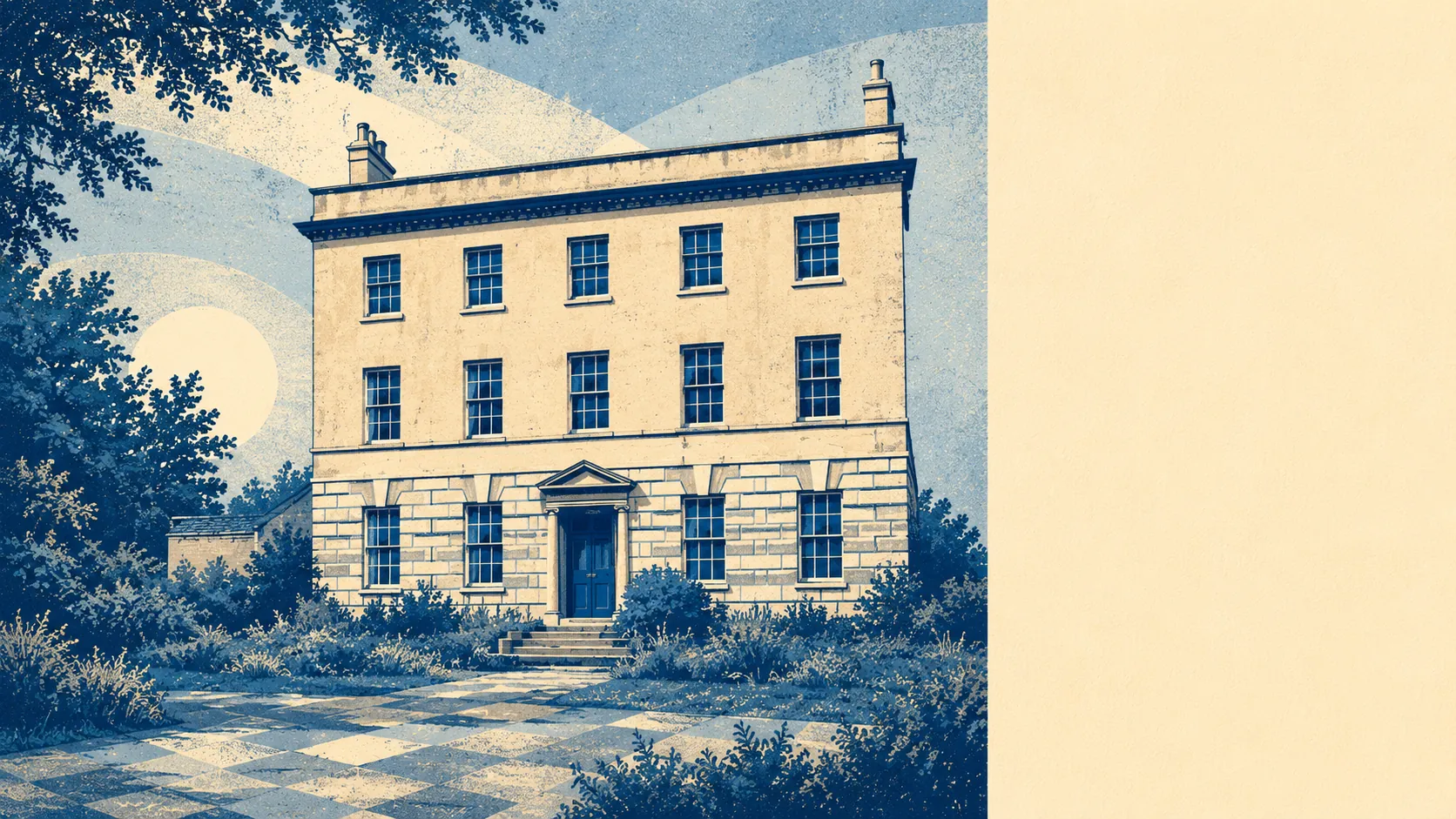
Saltford is a rowing club that grew a village around it. The median age is 52. More than half of households run two cars or more. Getting on for nine in ten homes are owned outright or on a mortgage, the branch-line station shut in 1970 and the village has never quite forgiven anyone for it. This is not a stop between Bath and Bristol. It is a settled, well-off pause that watches the traffic go both ways and stays put.
The housing tells you who moved here and when. Seven in ten homes are houses, a full quarter are bungalows, and flats barely register at about three percent, which is roughly the share of the village willing to live without a driveway. The stock is mostly post-war, built between 1950 and the early 1980s, with only about one home in ten predating 1930. That vintage shows up in the energy ratings: nearly half sit at band D, a fifth land at band E or worse, and only about a third reach band C or better. These are warm-enough houses that cost real money to heat, and everyone who owns one knows it.
Buying in costs about £570,000 for the typical sale over the last year, off the back of 47 transactions, so this is a thin, slow market rather than a churning one. Detached houses run to around £640,000, semis to about £510,000, and the handful of terraces that changed hands came in near £306,000, which is the closest thing Saltford has to a starter price. Council tax leans heavy to match: the most common band is E, and fewer than one in ten homes fall into the cheap A or B brackets. You pay to be here, and then you pay again every April.
Renting is the exit most people never take. Typical private rent across the Bath and North East Somerset area runs at about £1,880 a month, and with the village overwhelmingly owner-occupied, the rental stock inside Saltford itself is whatever hasn't been sold yet. If you want to try before you buy, you try somewhere else first.
On safety the numbers are genuinely good, not spun. The published crime rate is about 36 per thousand people, roughly sixty percent below the Bath and North East Somerset average. That gap says as much about central Bath dragging the authority figure up as it does about Saltford, but the village end of the equation holds: this is one of the quieter corners of the region, and the crime data earns the reputation rather than merely surviving it.
Getting anywhere is a car decision. About four in ten residents drive to work and about the same share work from home, while train commuting rounds to nothing at all, which is what happens when your station has been closed since 1970. The nearest active stops are Keynsham and Oldfield Park, both a drive or a bus away rather than a stroll, and the local campaign to reopen Saltford's own station has been running long enough to become a personality trait. What does arrive reliably is broadband: gigabit-capable coverage reaches about 95 percent of the village, so the people working from home are doing it on a proper connection.
The surroundings are the easy sell. Green space sits under 200 metres from the average front door, with something like eight green spaces within a kilometre and the River Avon close behind. Flood risk is real but contained: about one in ten postcodes carry some high surface-water risk, more sit at medium or low, and the Environment Agency's most serious flood zone covers effectively none of the built-up area. The river gives Saltford its rowing club and its walks. It has the decency, mostly, to stay in its channel.
Heritage here is a light touch rather than a straitjacket. The village holds around 41 listed buildings, almost all of them grade two, plus a single conservation area covering Saltford itself and one scheduled monument. Saltford Manor House, dated to about 1160, claims to be the oldest continuously occupied house in England, which is the sort of fact a village dines out on for nine centuries. For most owners the practical effect is modest: unless your address is one of the listed few, altering your post-war semi is a matter of ordinary planning rather than a negotiation with the past.
The character follows the money and the age profile. About 86 percent of homes are owner-occupied, the median resident is 52, and household income sits around £63,000. This is a village of people who arrived, liked it, and stopped looking, which produces the calm and the quietness and also the faint sense that the exciting years happened somewhere else.
Saltford suits the settled buyer with a car, a deposit, and no particular need for a nightlife. If you want low crime, green walks, a good primary, and neighbours who will still be there in twenty years, this is close to purpose-built for you. It does not suit anyone chasing a city buzz or a bargain. If you turned up expecting Chew Magna prestige at a Keynsham price, the market will correct that assumption in about a week, and if you wanted somewhere with a pulse after nine at night, that is what Bradley Stoke and Montpelier are for.
The village has form for quiet notables. Racey Helps wrote and drew children's books here, inventing Barnaby Littlemouse a short walk from where the rowing eights launch. Horace Batchelor, the football-pools advertiser who spelled out a Keynsham postal address on the radio for years, lived alongside a Royal Navy admiral, Benedictus Marwood Kelly, and the cricketer Donald Wilkins, who played for Somerset and died in the village. The Avon County Rowing Club has sent crews to Henley Royal Regatta, which is roughly the level of ambition Saltford is comfortable admitting to.
The verdict lands at above average, and the split is stark. The local community is the standout, safe and green and stable in a way most places can only advertise. House prices and value are the weak point, because everything good about Saltford is already priced in and then some. Buy here for Keynsham with a rowing club and a heavier mortgage. If you thought you were getting Chew Magna, keep looking.