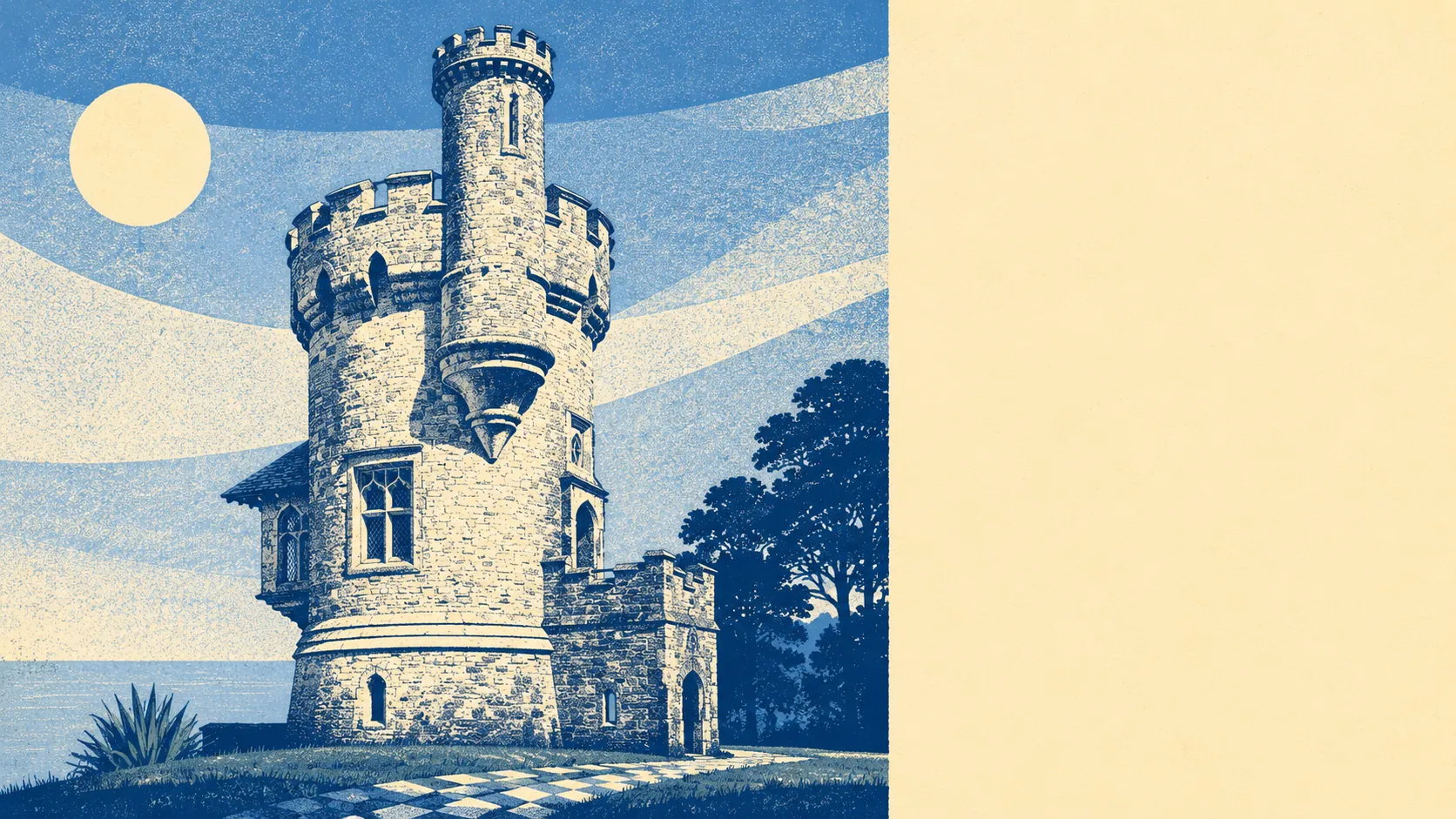
The surroundings are the best thing Ryde has going for it. Green space starts about a hundred and forty metres from the average front door. The water is barely further. Roughly twenty greens and parks sit inside a walk. For a town that sells itself on a pier, the countryside and the coast are doing most of the actual work.
On green space, the numbers are unusually good. The average postcode in the area sits about 140 metres from open green space, with around 21 separate sites within a kilometre. That is a level of access most English towns advertise on a brochure and quietly fail to deliver, and it holds across the town rather than clustering around one large park. Ryde is not a place where you drive to the green bit.
Water is the other half of it. Blue space, meaning the sea, rivers and other open water, sits about 360 metres from the average postcode, with roughly 20 separate stretches inside a kilometre. Living on the north-east coast of an island will do that, but the point stands: the water here is a daily feature rather than a weekend outing.
For getting out into it under your own steam, the National Cycle Network runs about 800 metres from the average postcode, and roughly 36% of the area's postcodes sit close to it. Ancient woodland does not feature at all, which is the honest picture: this is coast and open green rather than old forest.
The high street is more substantial than a town of this size usually manages. The valuation list carries 307 shop premises, 26 pubs and 24 restaurants across the area. That is a working town centre with a genuine retail spine, not a parade of three units and a hope. Alongside it sit the villages that ring the town: Binstead, Nettlestone, Seaview, Spring Vale, Fishbourne and Appley among them, most of which are a few minutes out and none of which are trying to be Ryde.
On air, fine-particle pollution across the Isle of Wight council area measured about 5.6 micrograms per cubic metre in 2024. That is a council-area figure rather than a street-level one, and it is the sort of reading an island with no motorway and a lot of prevailing wind tends to produce.
The Isle of Wight area of outstanding natural beauty clips the edge of the area, overlapping about 0.1% of it. That is a technical touch rather than a meaningful constraint or a selling point, and the designated landscape proper lies elsewhere on the island.
Character-wise, the area reads as a Victorian resort with genuinely rural edges. Quarr Abbey and its precinct walls sit to the west, the Woodlands Vale estate to the east, Puckpool mortar battery on the shore between them, and Ashey Down rises inland carrying a Bronze Age barrow cemetery and a sea mark. The Royal Victoria Arcade handles the genteel end of the shopping. It is a town with proper edges rather than a sprawl that fades into an estate.
Private outdoor space is the part nobody measures and everybody wants. Across the area there are roughly 143,000 square metres of private garden per 1,000 residents, with gardens making up about 27% of the total land area. That is a genuinely garden-heavy town, which is what happens when a Victorian resort gets extended with post-war housing on plots that were not squeezed.
The wider commercial picture covers 808 rateable premises on the valuation list, including 97 offices and 196 holiday lets. Those are premises rather than trading businesses, and the holiday-let figure is the one that tells you what kind of town this is in August.
Eating out is reliably decent. Of the 173 food premises with a published hygiene rating, about 62% hold the top score and roughly 3% sit at the bottom two. The odds are firmly with you.
On protected landscapes, the honest position is that there is essentially nothing here: no site of special scientific interest, no ancient woodland, and only that marginal touch of the area of outstanding natural beauty. That is not a failing. It means the green space around Ryde is ordinary, accessible, walkable land rather than protected scenery you look at from a car park.
The surroundings are Ryde's strongest hand by a distance, and the town does not have to work for it. Green space at the end of the street, water a few minutes past that, and gardens that people actually use is a combination most seaside towns pretend to have.