Yes, if you have already had your fill of things happening. Northam is a market town that let the coastline take all the credit and quietly kept the parking. Three-quarters of people own their homes. A third of everything on the council-tax list is a bungalow. The median resident is in their mid-fifties and staying put. A town that made its choice decades ago and has been comfortable in it ever since.
The stock is bungalow country with detached houses filling in around it. Across the full council-tax valuation list of about 4,570 homes, roughly 34% are bungalows and 26% detached, with terraces at 17%, semis at 13% and flats trailing at 9%. Only about 15% of it predates 1930, so most of what a buyer walks into went up in the second half of the last century for people who wanted one floor, a garage, and no stairs to negotiate at eighty. Energy certificates split the town down the middle: about half sit in bands A to C, around 40% land in band D, and roughly 10% are band E or worse, which is the group where retrofit quotes start arriving in thick envelopes. About 74% run on mains gas. The 8% on electric-only heating are the ones to ask about before the viewing rather than after, because in an uninsulated bungalow that is a running cost, not a footnote.
The Land Registry's last twelve months, to late May 2026, recorded 54 sales at a median of about £337,000. Type does the sorting. Detached homes came in around £395,000 across 33 sales, semis around £285,000 on a thin five, and terraces around £221,000 across 14. That terrace figure is the one worth staring at, because it is the cheapest honest way into a town that otherwise prices like open country with a sea view. Council tax settles at band C for the most common dwelling, with about 38% of homes in bands A or B. The wider house price index for the area sat at about £257,000 as of May 2026 and has moved down a fraction over the year, so nobody here is being hurried by the market.
Renting is measured across the Torridge area rather than the town itself. Typical private rent across the Torridge area ran at about £790 a month as of April 2026, up about 3% over the year, with two bedrooms around £740 and three around £905. Those are area typicals covering everything from inland villages to the estuary, so treat them as a starting position rather than a quote.
Recorded crime runs at about 36 offences per 1,000 people in the year to May 2026, roughly 34% below the Torridge average of about 55. That is the published neighbourhood rate, not a sum worked out from the resident headcount. Across the Devon and Cornwall force area, about 8% of recorded crimes end in a charge or summons against about 12% nationally, so the comfort here comes less from what happens after an incident than from how few opportunities there are to start one.
Getting about is where the town gives with one hand and takes with the other. About 60% drive to work and roughly 22% work from home, while the bus carries about 3% and the train share sits under 1%, which is what happens in a town with no station. There are 29 bus stops averaging about 42 scheduled weekday departures each, which sounds generous until it resolves into roughly two buses an hour at peak, and only 17 of those stops see any weekend service. Bideford town centre is about 10 minutes by car against about 18 by public transport on Department for Transport modelling from 2019, and the nearest hospital is about 28 minutes by car against about 69 by bus, a gap that tells you which one anybody actually uses. Broadband is the pleasant shock: gigabit service reaches about 91% of premises, superfast about 99%, and nothing falls below the minimum service standard. Mobile signal from every major operator covers about 95% of the area. The town had its own railway station between 1901 and 1917, and nothing since has felt the need to replace it.
Flooding needs its labels kept straight, because two different measures get quoted about this coast. On the postcode indicators, which include surface water, about 11% of Northam postcodes carry a high rating on at least one measure, about 14% medium and about 31% low. In the Environment Agency's river-and-sea flood zones, the ones a lender asks about, the figure is roughly 1% of the area, and nothing here appears in the record of historic flooding. Green space is where the town wins outright: the average postcode is about 180 metres from one, with about 15 within a kilometre, and open water about 665 metres away. Half the town sits within about 930 metres of the coast, and roughly 7% of postcodes sit hard against it, the nearest about 82 metres from the water. The shoreline management policy across every postcode here is to hold the line, and the nearest long-record tide gauge shows sea level rising about 2.35 millimetres a year, which is nobody's emergency this decade and everybody's arithmetic eventually.
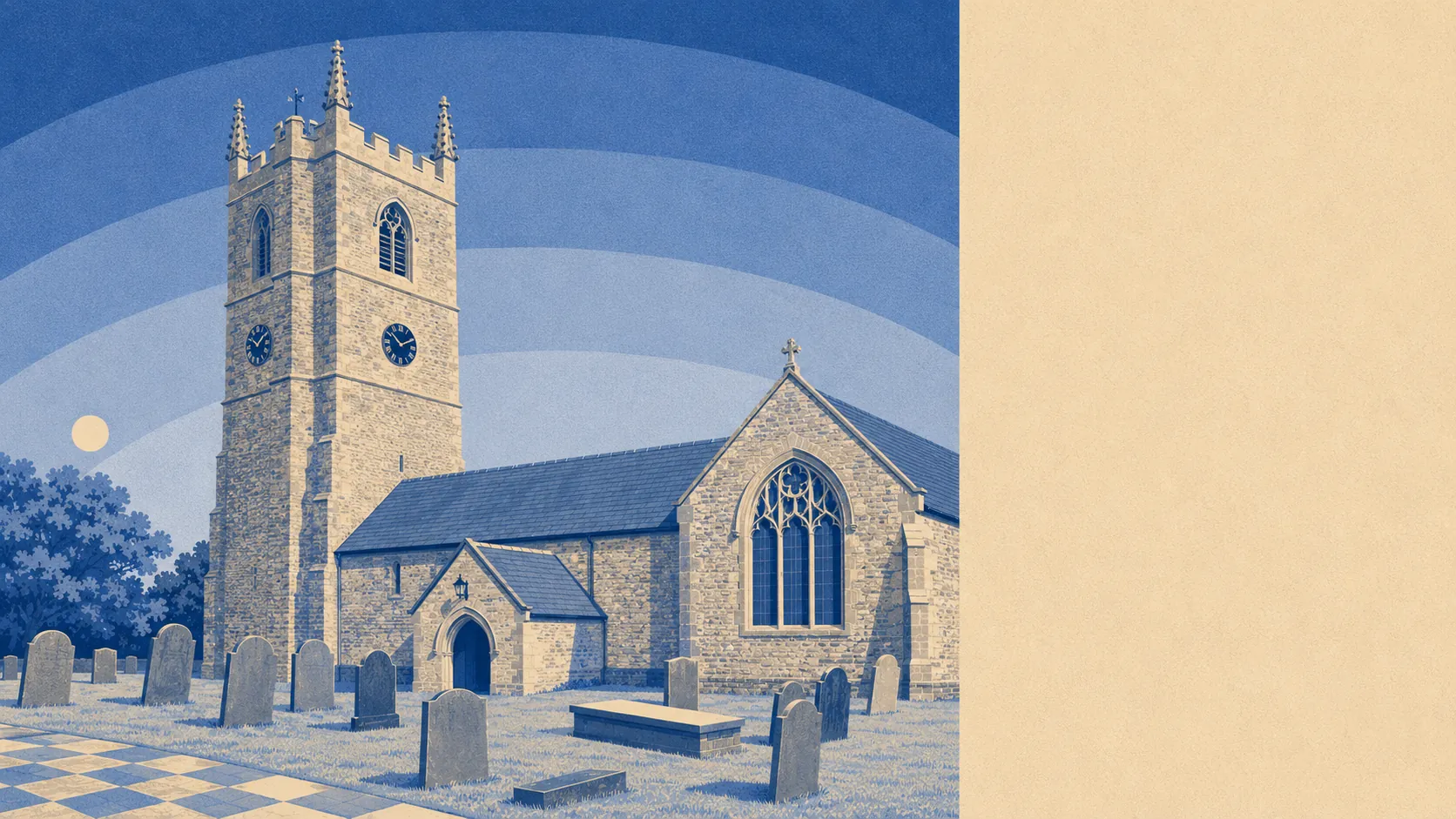
Heritage constraint is real but narrow. Thirty-five listed buildings, of which one is Grade I, two Grade II star and the remaining thirty-two Grade II, plus one conservation area over the old core and one scheduled monument. The Grade I entry is St Margaret's church. Most of the town can therefore do as it pleases with its windows, while a small, well-drawn slice needs permission to change a door handle. One listed building currently sits on the Heritage at Risk register, which is one more than a town this attached to its churchyard would like.
About 5,900 people live here across roughly 2,850 households, and about 74% own their home. The median age is 56. Median household income before tax ran at about £42,400 in the financial year to March 2023. Around 34% of households are one person living alone and about 21% a single pensioner, against roughly 14% that are a couple with children. The child-rearing phase finished here a while back and hardly anyone sold up afterwards.
Appledore is covered on this page too, and it is the bit doing most of the work on the area's reputation: a shipbuilding village at the mouth of the Torridge with a lifeboat slipway, galleries, and an ice cream brand that has never troubled itself to sell outside North Devon. Northam is the part that pays the bills and lets Appledore be photographed.
It suits people who want a single-storey house with a garden, a car on the drive, and a coast they can walk to without paying resort money for the view. It suits remote workers, because the broadband here will always beat the bus timetable. It suits downsizers, and anyone whose week revolves around water, weather and being left alone.
It does not suit anyone who needs a train, a hospital in under half an hour, or a way home on a Sunday evening that is not their own car. It does not suit a family hoping their children will find a dozen others on the same street, because the households with children in them are outnumbered several times over by households of one. And it does not suit a buyer waiting for the town to become something else, since it has had a thousand years of practice at declining to.
For somewhere this quiet, the residents list is oddly ambitious. Steven Borough sailed for the Arctic in the sixteenth century. Sir George Stapledon spent the twentieth building a career out of grassland science, which in a parish attached to Northam Burrows is either poetry or an occupational hazard. Godiva Marian Thorold helped found the British Nursing Association. Clarence Raybould conducted orchestras and is buried at St Margaret's. The town also gathered in 1832 to object to the lord of the manor helping himself to the common, which stands as the most Northam entry in the record: a public meeting, about land, held by people who would really rather not make a scene.
So, yes, Northam is a good place to live, provided the life you are buying is one that already knows what it wants. Its real strength is the ground it stands on: green space a couple of minutes from the door, water close enough to matter, and a crime rate well under the district's. The weak spot is getting out, because the buses thin to nothing at weekends, the station closed a century ago, and the hospital is a proper drive. Buy here for what surrounds the house, not for the road away from it.