Yes, and most of the reasons start where the town stops. Two thirds of households own. The typical sale is a quarter of a million pounds. Green space begins a couple of minutes from nearly every front door, with Dartmoor one way and the Teign estuary the other. People arrive aiming at one of those two and end up buying the town that serves both. Nobody puts that on the plan, and it works out anyway.
The housing was built for people who work rather than people who visit. Taking every dwelling on the council tax valuation list, about 30% are terraced, 22% semi-detached, 18% flats, 17% detached and 14% bungalows. Around 28% went up before 1930, which leaves the bulk of it post-war and estate-built. On energy certificates, roughly 52% of certificated homes reach bands A to C, 36% sit in band D and 12% land in band E or worse. About 76% are heated by mains gas. Around 10% run on electricity alone, and in an older house that is a running-cost fact worth establishing before the offer rather than after the first cold snap.
The Land Registry recorded 388 sales in the twelve months to May 2026, at a median of £250,000. Flats came in around £152,000, terraces around £215,000, semi-detached around £265,000 and detached around £373,000, so the ladder here still has rungs rather than one expensive step. Band B is the most common council tax band, and about 48% of dwellings sit in bands A or B. This is not a town holding its breath about affordability.
Renting typically runs at about £950 a month across the Teignbridge area as of April 2026, roughly 4% higher than a year earlier. That is a district-wide average from the official rent index rather than the town's own median, so read it as the shape of the market and not a quote. Two-bedroom homes across the same district average about £860.
Safety is where the honest answer gets uncomfortable. Recorded crime across the neighbourhood areas covering the town ran at about 84 crimes per 1,000 people in the year to May 2026, against about 61 for Teignbridge as a whole, which puts the town roughly 36% above its own district. Violence and sexual offences make up about 46% of recorded crime here against 35% across England and Wales, though that is a broad statutory grouping taking in common assault without injury, so it describes a category more than a scene. Shoplifting runs at about 10% against 8% nationally, which follows from being the place with 548 shops on the valuation list and a ring of villages that come here for everything they cannot get at home. It is a published police figure rather than a headcount, and it is the one number that should slow a buyer down.
Newton Abbot Rail Station is actually in the town, which is more than Bovey Tracey, Ipplepen, Kingskerswell or Bishopsteignton can say, since all of them treat it as their railhead. Around 1% of working residents here commute by train. About 56% drive, 23% work from home and 11% walk. There are 160 bus stops in the area, 154 of them with published timetables averaging about 52 weekday departures each, and 99% of those keep a weekend service. Broadband reaches superfast speeds at about 99% of premises and gigabit at 93%, with none falling below the government's minimum standard, and about 97% of the area gets a usable signal from every mobile operator. The town owns the station everyone else drives to, then drives to work.
Flooding needs its labels kept straight. About 13% of postcodes carry a high rating on at least one flood indicator including surface water, with 18% medium and 29% low. Measured a different way, about 15% of postcodes fall inside river-and-sea flood zone 3 and 4% inside zone 2. Around 12% have a recorded historic flood, from 123 logged events, the most recent dating to December 1979 when the River Lemon came over its banks two days after Christmas. Against that, green space sits about 170 metres from the average postcode with around 20 sites within a kilometre, and water about 290 metres. Radon deserves a line: roughly 71% of the area falls in band 3 or higher and the worst of it reaches the High band, which calls for a test kit rather than a panic.
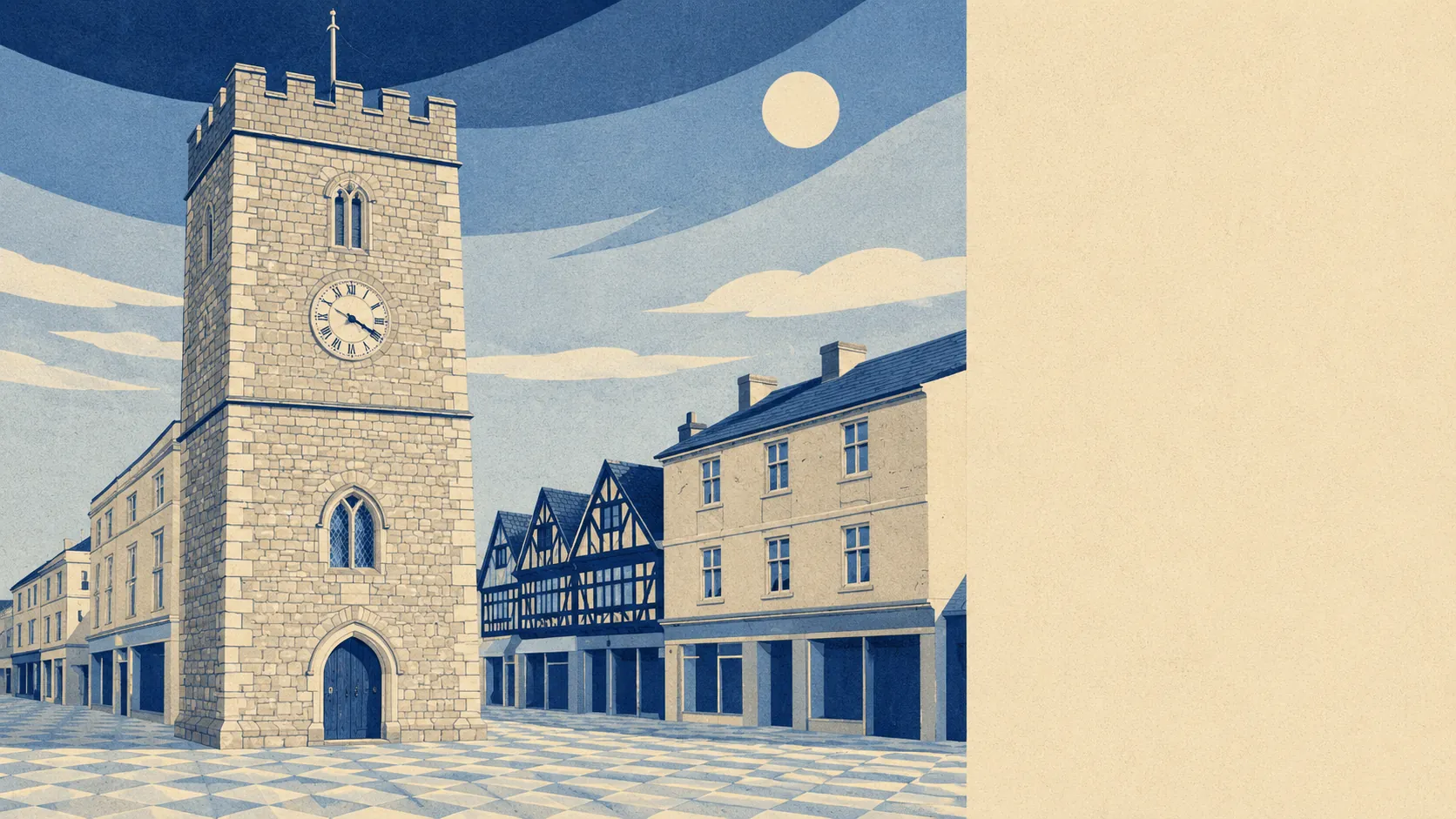
Heritage is a light constraint here by Devon standards. There are 171 listed buildings, five at grade one and three at grade two star, and six conservation areas including Courtenay Park and Devon Square, Forde Park, Wolborough Hill and East Ogwell. Inside those boundaries, replacing windows, cladding a wall or fixing panels to a roof stops being purely your decision, and on a listed building consent reaches indoors as well. The tower of St Leonard still stands in the middle of the traffic because the medieval chapel behind it was demolished in 1836 to ease congestion, so the argument about this town and its road layout has been running for a while.
About 66% of households own their homes, the median age is 43, and household income runs at about £51,000 before tax in the financial year to March 2023. This page also covers Abbotskerswell, Denbury, East Ogwell and Coldeast, plus Widecombe in the Moor, which is a different animal entirely and priced like one.
It suits buyers who want a garden, a driveway and a train they could theoretically walk to, and who intend to spend their weekends on the moor or the water rather than on the high street. It suits families who need a real town with real shops attached to real countryside, at a price the coastal towns stopped offering.
It does not suit anyone shopping for the Devon of the tourist board, and it does not suit a buyer who wants a market town with a quiet crime record to match its market charter. Those two things are available in the villages around it, at a premium, with a car dependency to go with them.
The town has form for making a living out of other people's water. Robert Hayman went from here to govern Newfoundland and write poetry about it, and for two and a half centuries local men were hired at inns on East Street for a season's work at the cod fisheries, which is why the street names still say Newfoundland Way and St John's Street. John Lethbridge built a machine for getting inside sunken ships, which is a very Newton Abbot answer to a problem: somebody else's disaster, turned into a trade. Sir Samuel Baker, explorer and abolitionist, bought the Sandford Orleigh estate here in 1874 and stayed.
Newton Abbot is a good place to live, and a better one if you spend part of your week outside it. Its real strength is the ground it stands on: green space minutes from the door, the moor and the estuary within reach, and prices that still let an ordinary household buy a house with a garden behind it. The weak spot is safety, where the recorded rate sits well above the rest of the district and no amount of countryside talks it down. Buy it for the ground and the price of standing on it. Everything else is negotiation.