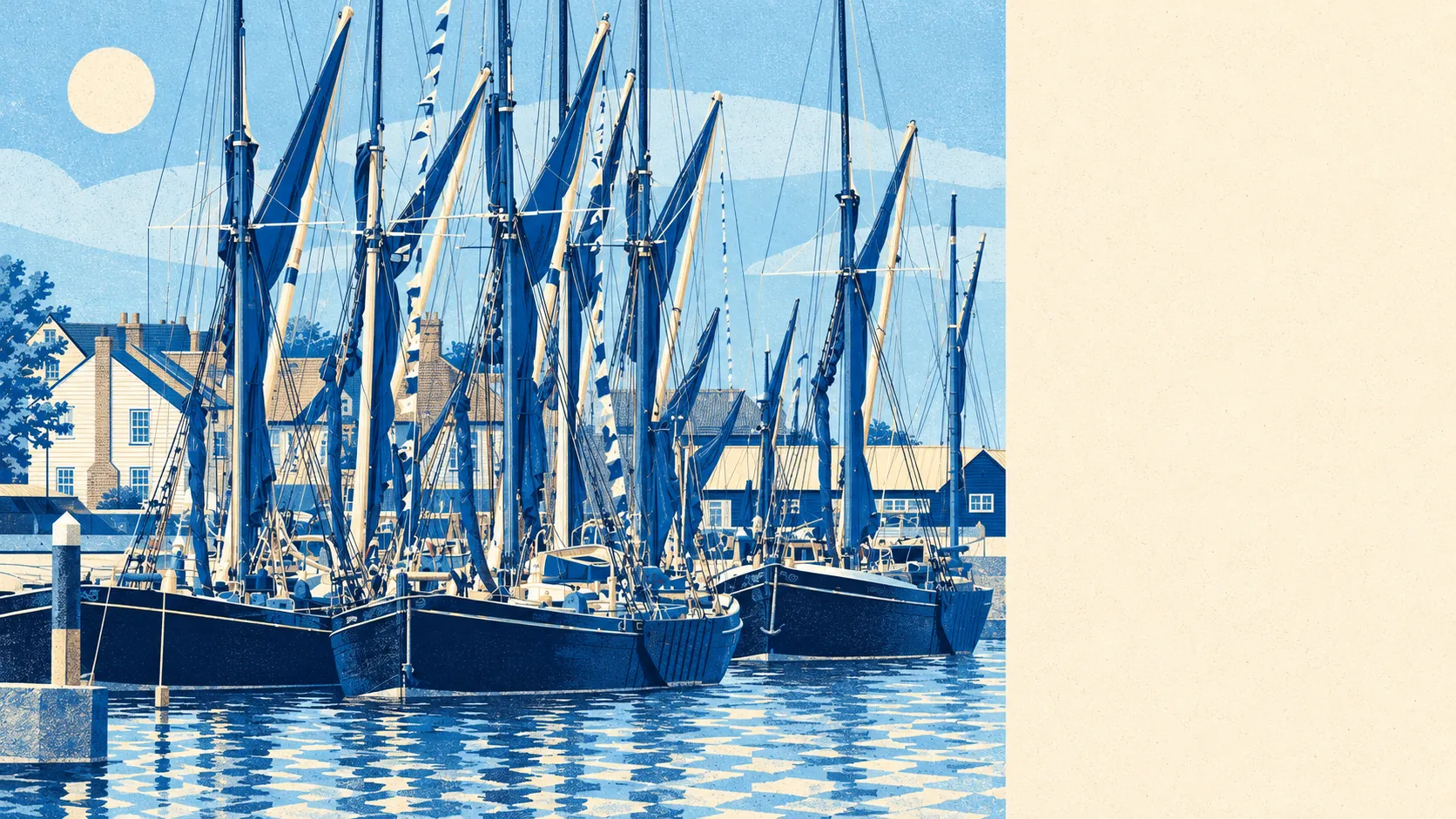
Green, wet and close to hand. A park is a couple of minutes from most front doors. Water is barely further. Dozens of green spaces within a short walk. Maldon's surroundings are the reason most people stay, whatever brought them in the first place.
The average home in Maldon is about 150 metres from its nearest public green space, and about 18 green spaces lie within a kilometre. Promenade Park runs down to the estuary, and the rest are spread through the estates and the older streets. Grass, for most people here, is a matter of opening the front door.
Water is nearly as close. The nearest blue space is about 225 metres from the average home, and about 66 separate stretches of water lie within a kilometre of it, from the Blackwater Estuary to the Chelmer and Blackwater Navigation and the creeks and basins between them. A town that grew up as a port has never had to go far for the water.
The National Cycle Network is about 550 metres from the average home, and about 56% of postcodes are close to it. That puts a signed route out of town within reach of more than half the doorsteps here.
The council's rated-premises records count 261 shops, 30 pubs and 23 restaurants in the town. Maldon Rugby Union Football Club was founded in 1947 by a pub landlord at a meeting in the Blue Boar Hotel, and 30 pubs against 23 restaurants suggests the town took the lesson to heart.
Fine-particle air pollution across Maldon district stood at about 7 micrograms per cubic metre in 2024.
The town has a clear old core and a wide country edge. Hythe Quay, the High Street and the Moot Hall carry the history, Heybridge Basin runs along the waterside, and Beeleigh Abbey sits upriver to the west. Around the edge, Heybridge, Great Totham, Wickham Bishops, Purleigh and Mundon are the villages buyers drive through on the way in, and the page also takes in Cold Norton and Tolleshunt Knights further out. The town is where the shops and the quay are. The villages are where the bigger gardens went.
Private outdoor space is generous. Across Maldon's neighbourhoods there are about 161,000 square metres of private garden for every 1,000 residents. That is a town where most households have their own patch of lawn, and spend their weekends looking after it.
The valuation list for the area holds 916 rateable premises. The largest groups are 236 shops and 166 offices, followed by 111 industrial premises of one class and 65 warehouses. Those are premises on the rating list, which counts the buildings and units that are assessed, whether or not each one is trading today. A working town hides behind the heritage, with a fair share of its space given over to workshops and storage.
Eating out is clean. Of the 174 food premises rated for hygiene, 92% hold the top score, and about 1% fall at the bottom end. In Maldon, a five-star hygiene rating is so common that a lower one stands out.
No area of outstanding natural beauty, site of special scientific interest or ancient woodland overlaps the town. Maldon's landscape is estuary, farmland and town parks, protected by no national designation and used constantly by the people who live beside it.
The surroundings are among Maldon's real strengths: parks, water and garden space are close at hand for almost every household, and they are what make the rest of the town worth the trade-offs.