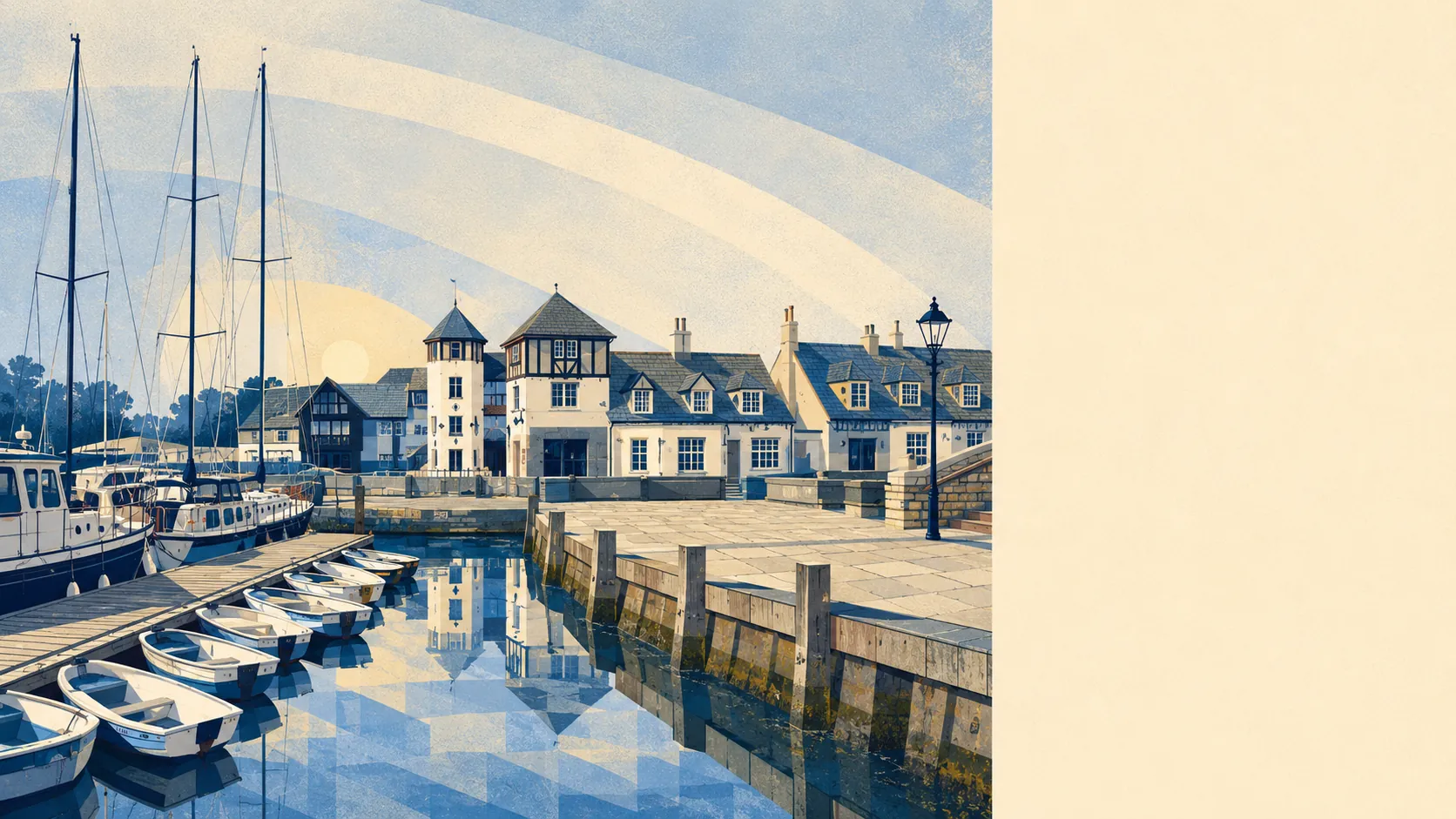
Lymington is the town the rest of the Solent settles for not being. Detached houses go for close to £800,000. The median resident is 53. A third of homes are rented, and most of the rest belong to people who bought before any of this got expensive. This is old money with a marina, not a market town that happens to have a nice view.
The housing stock is mostly proper houses, which sets Lymington apart from the flat-heavy resort towns further along the coast. Close to six in ten homes are houses, about a quarter are flats, and roughly one in eight is a bungalow, which tells you plenty about who has been retiring here. On energy it lands in the middle: about half the stock rates a C or better, a third sits at D, and roughly one in nine is E or worse. Most of it went up between 1950 and the early 1980s, so the Georgian quay everyone photographs is a smaller slice of the town than the brochures let on.
The typical sale over the past year came in at £410,000, across a bit over two hundred sales, so this is not a thin market you have to fight your way into. The spread is the real story. A detached house runs close to £800,000. A terrace is about £380,000, a semi about £370,000, and a flat about £245,000. That gap between the detached and everything else is the difference between the people who arrived with a yacht and the people who arrived hoping to afford the mooring. Council tax mostly sits around band C, with only about one home in six down in the A-to-B bracket, which is another way of saying the cheap end of Lymington is not very cheap.
Renting is not the obvious move here, but if you go that way, the typical private rent across the New Forest area runs to about £1,240 a month. That is an area figure rather than the town's own, and Lymington is not the part of the New Forest dragging the average down.
Crime runs at about 59 recorded offences per thousand people, which is almost exactly the New Forest average. Not lower, because it is a busy town with a working quay and a summer tourist trade. Not higher, because most of what happens here is someone's dinghy going missing rather than anything you would cross the road to avoid. On the numbers it is an unremarkable place to be, and unremarkable is what most buyers are actually paying for.
Lymington has two of its own stations, Lymington Town and Lymington Pier, on a branch line that feeds into Brockenhurst, with Sway the next stop up. Useful, until you notice that under one in a hundred residents commute by train. Half drive to work and nearly three in ten now work from home, which is the real transport story in a town this age and this far from a motorway. Broadband holds up better than the trains: superfast reaches nearly every postcode, and gigabit is available to about two thirds.
Flooding is the price of the setting. Roughly one home in twelve carries a high surface-water or coastal flood risk, and a few more sit at medium, which is what you take on when you buy a town built around a river mouth and a saltmarsh. Read the specific address, not the town average. The compensation is green space so close it is barely worth measuring: open ground averages under two hundred metres from the front door, water not much further, and the New Forest starts more or less where the houses stop.
Heritage is where Lymington asks something back. There are 266 listed buildings and three conservation areas across the area, taking in Lymington itself, Buckland and King's Saltern. Buy one of the Georgian or Victorian houses that give the town its face and you inherit the paperwork that comes with them. Changing a window, a door, or anything visible from the street becomes a conversation with the planners rather than a weekend job, and that is the single biggest constraint the data flags about living here.
About two thirds of homes are owner-occupied, the median age is 53, and the typical household income is around £56,000. Put those together and you get a settled, comfortable, older town where people have mostly arrived where they wanted to be and are in no rush to leave. This page also covers Boldre, Hordle and Pennington in the parishes around the town, which run quieter and greener still and share the same basic bargain.
If you are retiring, downsizing from something bigger, or moving a family that does not need a nine o'clock desk in London, Lymington delivers the version of the coast most people carry in their heads, and it delivers it without pretending. If you sail, you already know why you are reading this.
If you need a fast commute, a cheap way in, or the freedom to knock your house about without asking permission, this is the wrong town, and the cost of finding that out after you have bought is high. There is no budget version of Lymington. That is rather the point of it.
The overall verdict is a solid, honest average: a three out of five made of genuine highs and one real catch. The surroundings score top marks, the green space and the Forest and the water doing exactly what the postcode promises. The catch is the freedom to alter your own home, which scores near the bottom once the listed buildings and conservation areas are counted. Everyone else on this coast is priced by how much cheaper they are than here. Lymington is the one place on the list with no cheaper version of itself, so either you pay for it or you buy the imitation across the water and tell yourself it is the same thing.