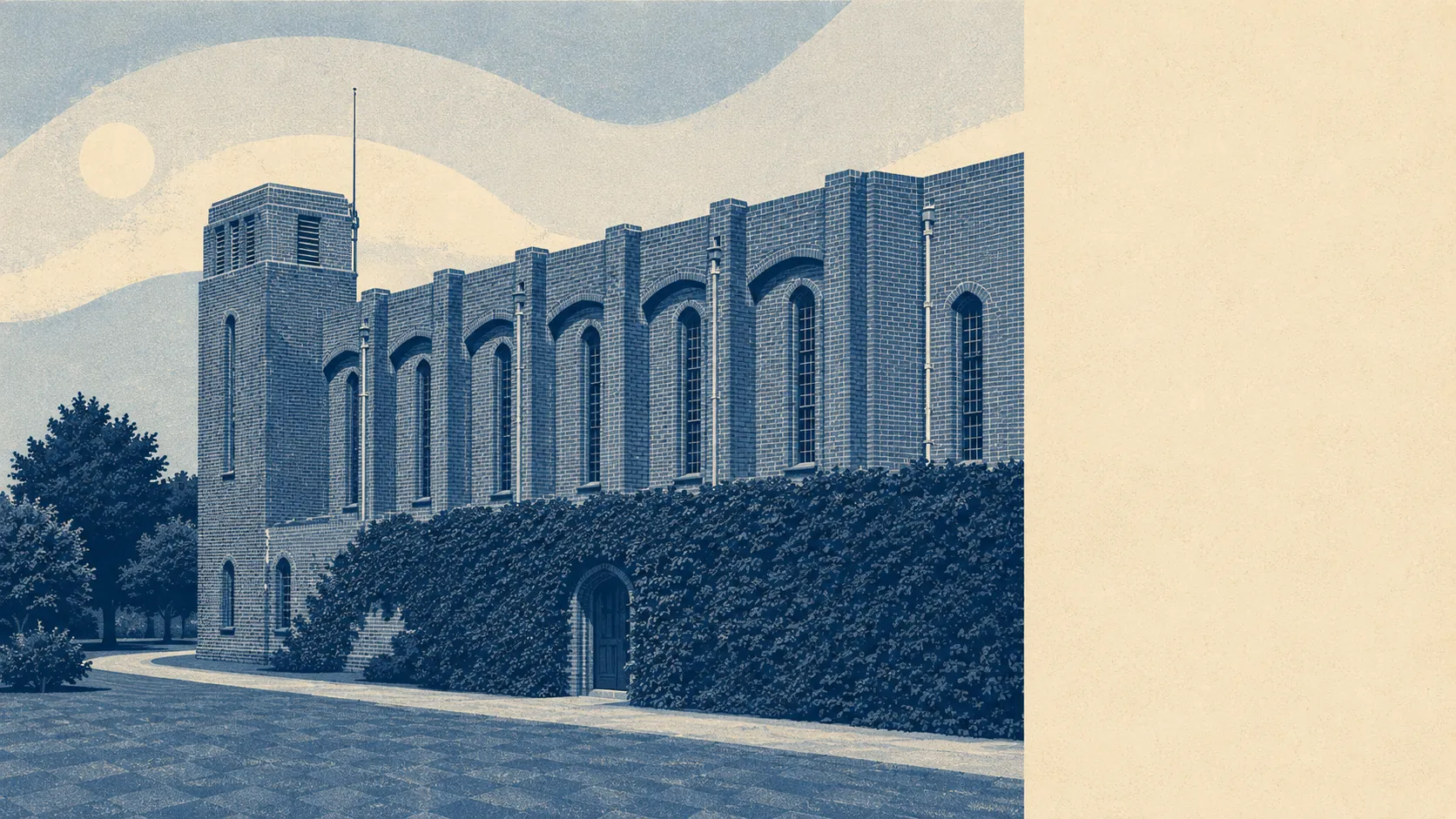
Larkhill is a workplace that came with houses attached, and the place makes sense the moment you stop expecting it to behave like a village. Most homes here are rented rather than owned. The typical resident is in their twenties. Nearly half the households are a couple with children. This is somewhere that was issued rather than grown, and that one fact explains most of what follows.
The housing is service-era brick and it does not pretend otherwise. Across every dwelling on the council tax list, semi-detached homes make up about 32%, terraces about 25%, detached about 20% and bungalows about 13%. Flats barely register at about 7%. More than half of all households have three bedrooms, which tells you exactly who the builders had in mind. About 14% of the stock predates 1930 and most of the rest went up between the 1950s and the early 1980s, so the energy performance is better than the architecture: roughly 74% of rated homes sit in bands A to C, about 26% in band D, and under 1% at E or worse. Around 62% run on mains gas and about 7% are electric only, which is a running-cost fact worth having before the viewing rather than after the first winter bill.
Two homes changed hands in the Land Registry's most recent twelve months of recorded sales, at a median of £245,000. Two sales is an anecdote, not a market, and anyone treating that as a valuation is doing arithmetic on a sample you could fit in a taxi. The council tax position is steadier and more revealing: band C is the most common, and about 38% of dwellings sit in bands A or B, which is the cheap end of the scale for a place where three-bedroom family housing is the standard unit.
Renting is the default, and the honest figure available is the wider one. Typical private rent across the Wiltshire area runs at about £1,060 a month, up around 7% over the year, with a three-bedroom home across Wiltshire averaging about £1,190. Those are area-wide numbers rather than Larkhill's own, and in a place where three bedrooms is the normal shape of a home, the three-bedroom figure is the one that matters.
Recorded crime runs at about 50 offences per 1,000 residents over the twelve months to May 2026, roughly 20% below the Wiltshire average of about 62. That is a published rate, not a count divided by the people who happen to live here. Garrison towns carry a reputation among people who have never set foot in one, and the reputation is not turning up in the numbers.
Ofsted has graded 128 settings across Wiltshire, of which 106 are good or better and six outstanding, with two inadequate. The three primary schools covering this postal district average about 102 on the Key Stage 2 maths score, and the one secondary school in the district posts an Attainment 8 score of about 35. Larkhill Primary School and Kiwi Primary School are among the local primaries, with Durrington All Saints and Netheravon All Saints Church of England Primary serving the neighbouring villages, and secondary options include The Stonehenge School and Avon Valley Academy. The modelled walk to a primary is about 13 minutes. The modelled walk to a secondary is about 63 minutes, or about 14 by car, and no child has ever tested the walking version twice.
Connectivity is where the place hands something back. About 49% drive to work and about 29% work from home, while well under 1% commute by train and about 2% by bus. There are 23 bus stops in the area, and the ten with published timetable data average about 78 scheduled weekday departures each, roughly two buses an hour at peak, with all ten running at weekends too. The nearest town centre is about 27 minutes by car against about 43 by public transport, and that gap tells you which one anyone actually uses. Broadband is the consolation prize and a good one: gigabit reaches about 96% of premises, superfast about 98%, and only about 1% falls below the universal service obligation. Mobile signal from at least one network covers all of it, and every network covers about 98%.
None of Larkhill sits in the Environment Agency's river and sea flood zones, and no historic flooding is recorded. The risk that exists is the other kind: about 4% of postcodes flag high risk on at least one flood indicator including surface water, about 8% medium and about 23% low. Green space averages around 150 metres away, with roughly seven separate spaces within a kilometre, and Salisbury Plain, the largest remaining area of chalk grassland in northwest Europe, begins where the houses stop. Open water is further off at about 1.5 kilometres. There is no Area of Outstanding Natural Beauty designation, no Site of Special Scientific Interest and no ancient woodland, which here reflects a shortage of paperwork rather than a shortage of country.
Heritage sits lightly on the houses and heavily on the ground beneath them. Four listed buildings are recorded, one at Grade II star and three at Grade II, the most characterful being a run of five aircraft hangars at Durrington Camp. No conservation area covers Larkhill itself; those are over in Durrington and Amesbury. What does surround the place is archaeology, with twelve scheduled monuments including Stonehenge, Durrington Walls and Woodhenge, Robin Hood's Ball, a long barrow inside Larkhill Camp and a bowl barrow sitting on the corner of Larkhill Race Course. For a normal extension that means ordinary planning rules rather than heritage consent. For anything involving a deep hole near a monument, expect somebody to want a look first.
About 24% of homes here are owned, which means three quarters of the place rents, and that shapes daily life more than any other single number. The median age is 28, single-pensioner households are about 3%, and couples with children about 46%. Median household income before tax was around £70,000 in the financial year to March 2023, which reads oddly beside all that low-band council tax until you notice how few of these households are one person. This page also covers Durrington and Netheravon, which share the same primaries and the same drive to anywhere else.
It suits people whose work is already on the Plain, and people who want a three-bedroom house with a garden and can accept that the sale market here is measured in single figures. Low crime, green space at walking pace and genuinely fast broadband make it an easy place to live in day to day.
It does not suit anyone who needs a station, anyone whose life runs on a bus timetable, or a buyer expecting the resale market to be liquid when the posting changes. Larkhill is a good place to live for the people it was built around and a peculiar one for everybody else. Its real strength is what surrounds it: green space at the end of the street, chalk grassland past that, crime comfortably under the Wiltshire average and no river flood zone to argue with. The weak spot is getting out, and no amount of gigabit broadband fixes a timetable you have to plan a day around. Buy here for the ground it stands on, and take the car.