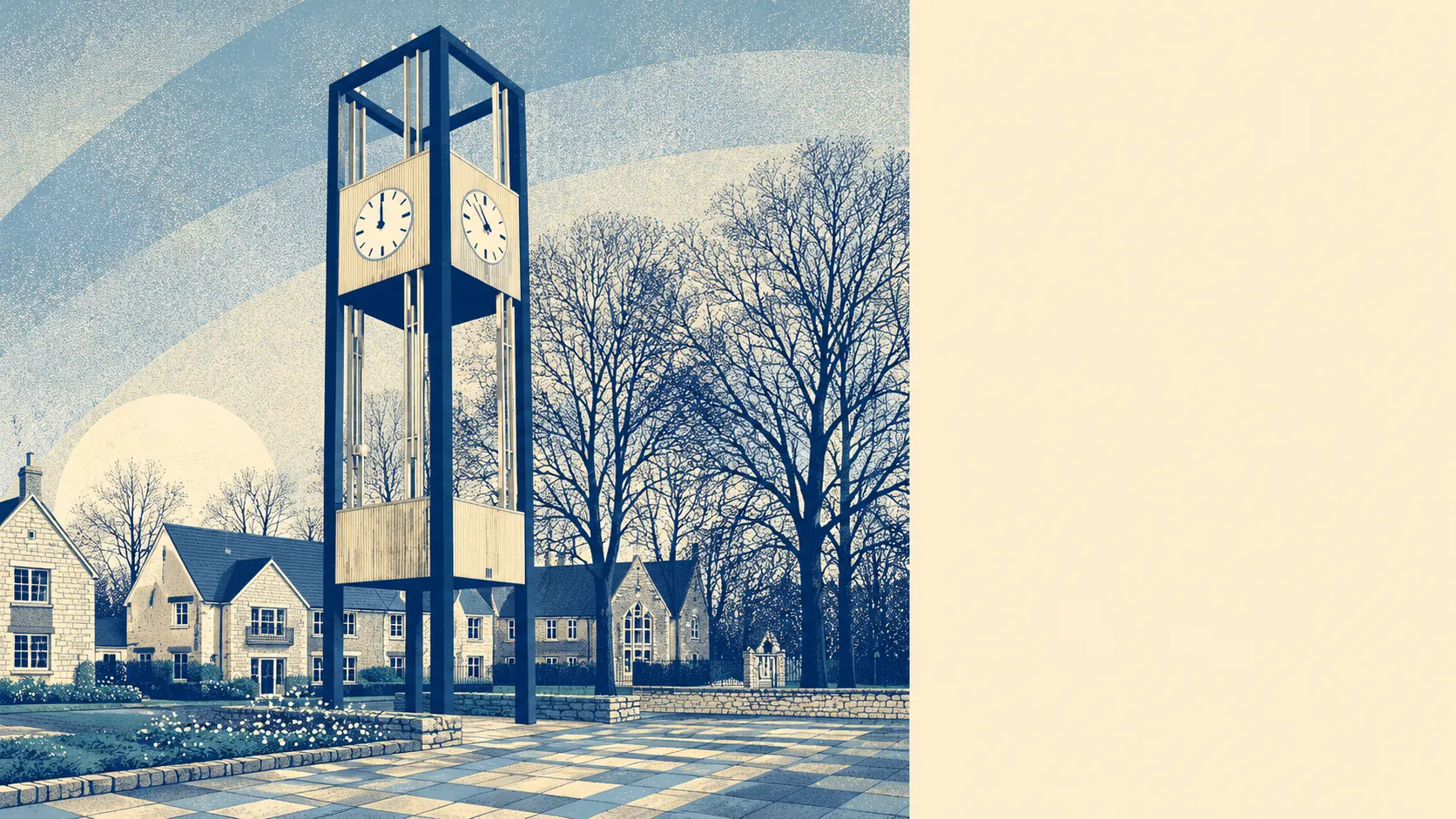
Keynsham is better connected than a town of twenty thousand has any right to be, and it barely uses half of it. It has its own railway station on a main line. It has well over a hundred bus stops. Fast broadband reaches almost every front door. Yet most people who leave for work do it behind a steering wheel, and a growing share do not leave at all.
The railway is the headline that undersells itself. Keynsham has a station of its own on the main line, which runs toward Bristol Temple Meads in one direction and on toward London in the other, and on paper that is a commuter's dream. In practice only about one in a hundred residents actually commute by train, so the platform is a good deal quieter than the timetable suggests. The bus network is denser on the ground, with over a hundred stops scattered across the town, though it too does modest work: roughly three in a hundred take the bus to their job. The infrastructure is here. The habit is not.
Broadband is where the town quietly gets ahead of itself. Gigabit-capable lines reach nearly nine in ten homes, and the standard superfast service covers almost all of the rest. For a place this size that is a strong hand, and it explains a fair amount about the commuting numbers, because for a lot of residents the fastest connection out of Keynsham is now the one that never leaves the house.
What it all adds up to is a town organised around the car and the broadband router rather than the bus stop. Better than four in ten residents drive to work, and close to four in ten now work from home, which between them cover most of the working population. The train and the bus sit there for the days you want them, not the days you cannot manage without them. The links you lean on hardest are the road out and the line into the spare room.
Keynsham is well connected, with one plain asymmetry running through it: the digital links are excellent, the road access is easy, and the public transport is present but underused. Well connected, then, so long as you are content to drive or log on rather than stand on a platform waiting for the town to catch up with its own timetable.