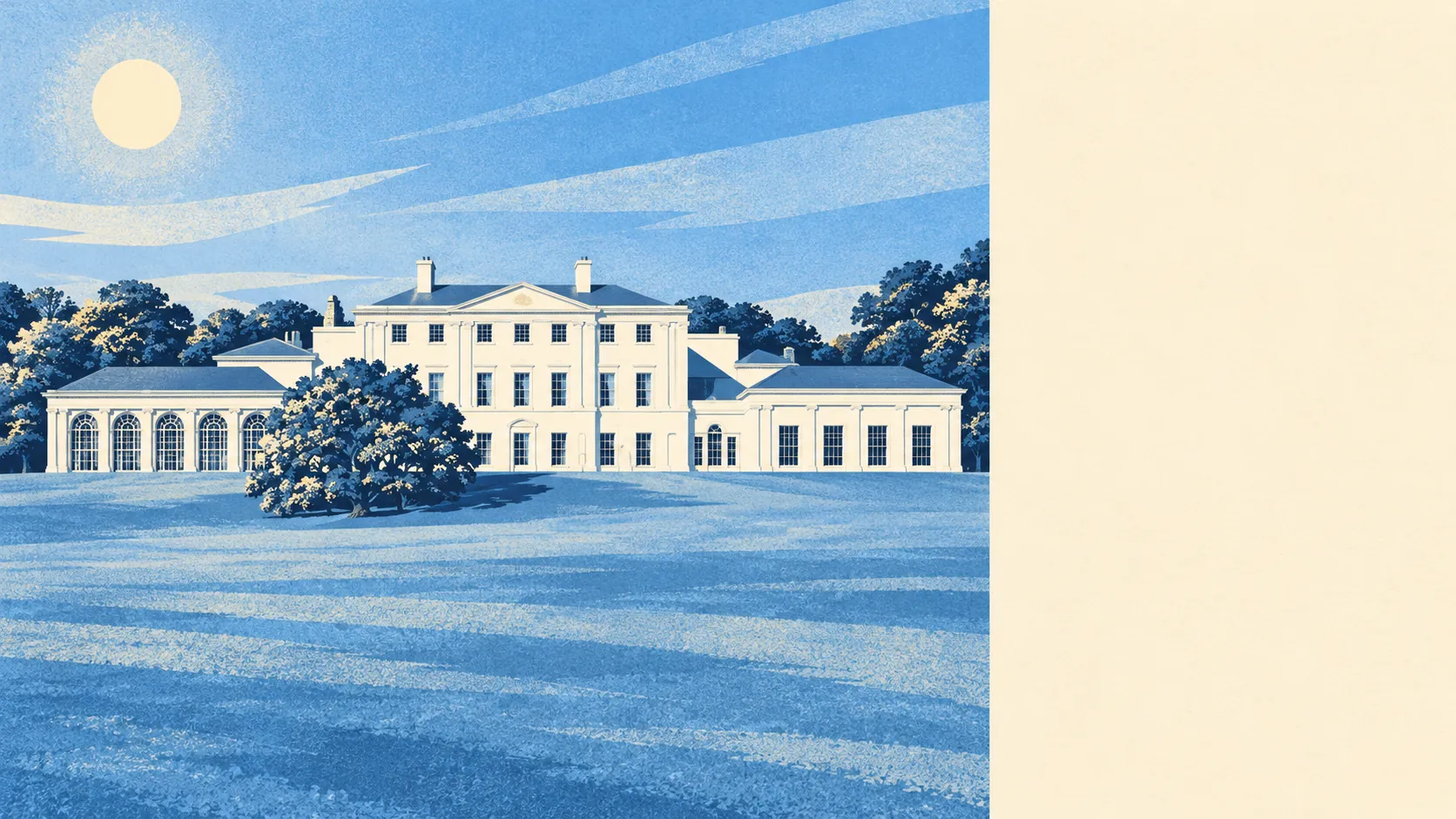
The area around Hampstead is one of the greenest parts of London, and it comes with a high street worth walking to. Green space is a couple of minutes from the typical front door. There are ponds within a walk. Pubs and restaurants are thick on the ground. The Heath does most of the work, and no national designation is needed to protect it in practice.
The average home in Hampstead is about 150 metres from the nearest public green space, with around 31 green spaces within a kilometre. Hampstead Heath is the big one, a sandy ridge of grass, woodland, ponds, a lido and playgrounds running up to Kenwood House. Parliament Hill takes up the south-east corner, and the view from it over London is protected by law. Primrose Hill is at the southern edge, with Waterlow Park and Highgate Cemetery beyond the Heath to the east. The protected view from Parliament Hill means a skyline that cannot be built in front of, which is more than most London views can claim.
The nearest water is about 790 metres from the average home, and there are around 10 bodies of water within a kilometre. Most of that is the Heath's ponds, which makes swimming outdoors in London a local option here.
The National Cycle Network is about 6,540 metres away on average, and no postcode in the area is close to it. Cyclists here use the bus lanes and the shared path across the Heath. There is no ancient woodland in the area on the official register.
The ratings list counts 499 shops, 24 pubs and 84 restaurants in Hampstead. That is a working high street with somewhere to eat on most corners, and a pub count that has survived better than the old spa did.
Air quality is measured for Camden Council's whole area, where fine-particle pollution averaged 9.5 micrograms per cubic metre in 2024. That covers the borough's busiest roads as well as the Heath.
The cultural attractions are dense for a neighbourhood this size. Keats House, Fenton House, Burgh House with the Hampstead Museum, the Freud Museum, the Camden Arts Centre and the Isokon building are all here, along with the converted Hampstead Town Hall. Hampstead Cemetery and the listed pergolas and summerhouses of the Hill Garden add to the picture. The Vale of Health sits inside the Heath itself, a cluster of houses entirely surrounded by parkland. Few places this close to central London have that much to do on a free afternoon.
Private outdoor space is less generous than the public kind. Hampstead has about 42,796 square metres of private garden per 1,000 residents, and with most homes being flats, plenty of that belongs to the ground floor. A flat with "garden access" in Hampstead can mean anything from a private lawn to a shared strip the whole building uses, and the lease or the title plan says which, so it is worth reading before relying on the description.
The valuation list holds 1,464 rateable premises in the area, led by 498 shops, 273 offices and 83 restaurants. These are premises on the rating list, which is not the same as businesses trading today, but the mix is a high street and a working office district rolled together.
Of the 377 food businesses with a published hygiene rating in the area, about 58% hold the top score of five, and about 8% sit at the bottom end of the scale. Most places pass, and a minority would need a closer look before booking a table.
No area of outstanding natural beauty, site of special scientific interest or ancient woodland on the national registers overlaps the area. Hampstead's green space is urban parkland, protected and much loved, but its value comes from the people using it rather than from any rare wildlife or habitat that would earn it a national designation.
The surrounding area is Hampstead's strongest point. Heathland, ponds and a busy high street are all within a short walk of most homes, and very little else in London puts them together like this.