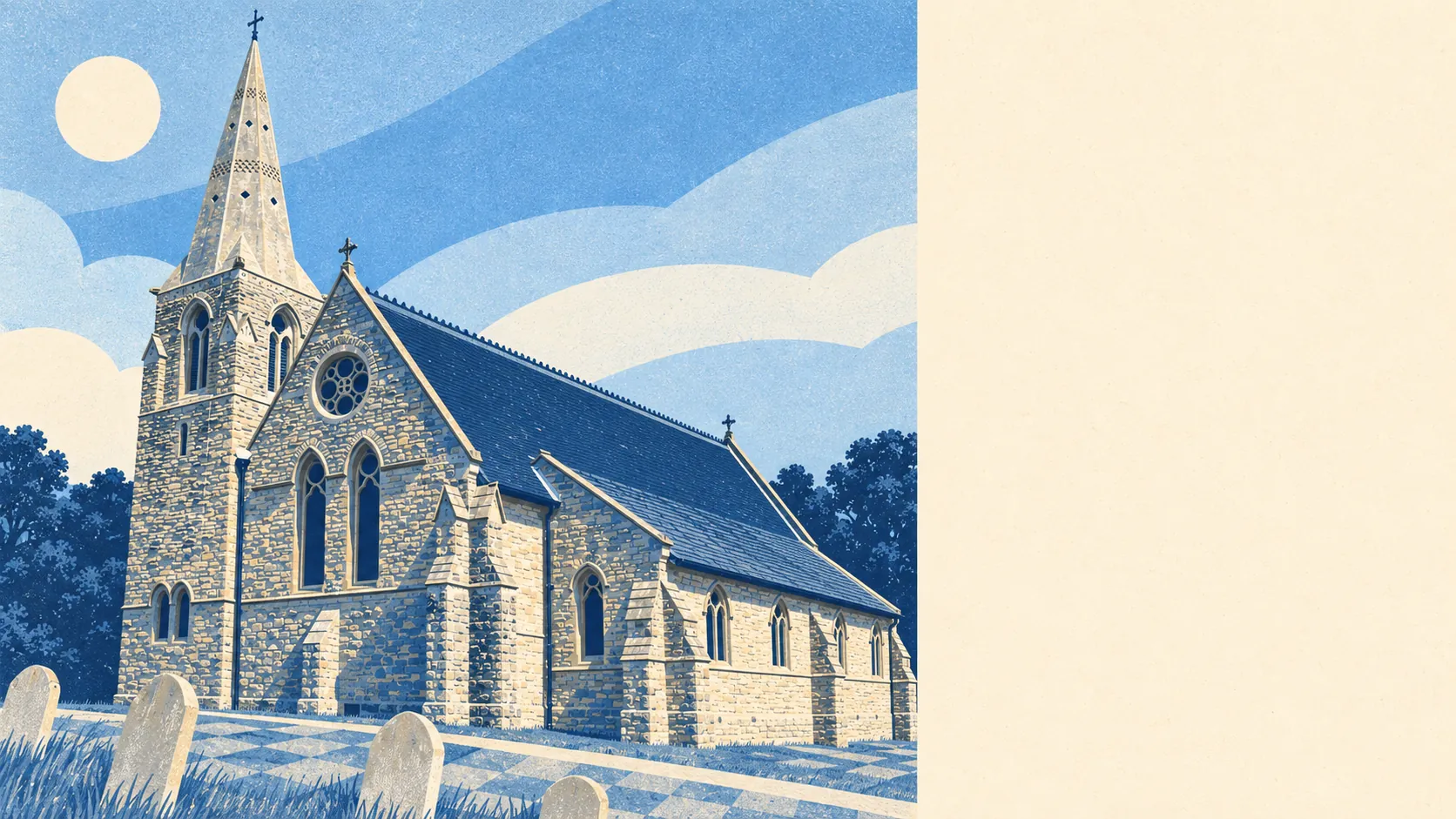
Copthorne is a good place to live if you can treat Gatwick as the neighbour nobody mentions at dinner. More than eight in ten households own their home. Four in ten homes are detached. There's green space a couple of minutes' walk from most front doors. It's a comfortable, well-heeled village that has made its peace with an airport over the hedge.
The housing is built for people who have already won. Across every home on the council-tax list, about 39% are detached, 23% semi-detached and 15% bungalows, against 9% terraced and 9% flats. Only 15% were built before 1930, so this is mostly post-war stock, and the energy certificates show it: about 55% are rated A to C, 34% sit at D and 11% at E or worse. Around 77% of homes heat with mains gas. Nobody here is rescuing a crumbling Victorian terrace for love. The bungalow count tells you how many people plan to stay until the stairs become a negotiation.
Prices match the driveways. In the Land Registry's twelve months to May 2026, 59 homes sold at a typical £450,000. Detached houses went for about £565,000, semi-detached for about £445,000, terraces for about £358,000, and the seven flats that changed hands for about £230,000. Council tax follows the same pattern: band F is the most common, and only 8% of homes sit in bands A or B. The cheap way into Copthorne is a flat, and in a whole year there were seven of them.
Renting is a minority pursuit. About 12% of households rent privately. The typical private rent across the Mid Sussex area was about £1,410 a month in April 2026. That's a council-wide figure, not a Copthorne one, and with so few rented homes in the village, choice will be thinner than the district average suggests.
Safety is the number people don't expect. Copthorne's recorded crime rate was about 80 per 1,000 residents in the twelve months to May 2026, roughly 28% above the Mid Sussex average of 63. A village of double garages is supposed to win that comparison, and it doesn't. The mix leans slightly towards public order offences, 9% of the total against 7% nationally, and anti-social behaviour, 19% against 16%. Violence and sexual offences made up 35%, level with the national share. That category is a broad statutory grouping that tops the list almost everywhere. Sussex Police charged about 10% of recorded crimes over the same year, against 12% nationally. That's a force-wide figure, and it says more about the county than about the village.
The primary schools hold up well. Across the three primary schools in Copthorne's postcode districts, pupils averaged a maths score of about 106 at the end of primary school. The one secondary school in those districts records an Attainment 8 score of 43. Across West Sussex, Ofsted has graded 103 of 122 settings good or better, 11 of them outstanding. Copthorne CofE Junior School and Fairway Infant School are the village names. The nearest primary is about a 14-minute walk on average. The nearest secondary is about 48 minutes on foot or 23 minutes by public transport, so for most families the secondary run turns into a driving job.
On connectivity, Copthorne owns the car keys. At the last census about half of workers drove to work, 39% worked from home and only 2% took the train. That's a striking number for a place within reach of Gatwick Airport, Three Bridges and East Grinstead stations. The trains are there. Copthorne drives past them. The village has 40 bus stops. Those with timetable data average 67 departures a weekday and about three an hour at peak, and every one has a weekend service. The Department for Transport's 2019 modelled times put the nearest town centre about 14 minutes away by car and 27 by public transport. Superfast broadband reaches about 97% of premises, but gigabit only about 52%. All four mobile operators cover about 98% of the area.
Flood risk here depends on which map you read, so both are labelled. On the postcode indicators, which include surface water, about 19% of Copthorne's postcodes carry a high risk on at least one measure, 11% medium and 32% low. The Environment Agency's river-and-sea flood zones look much calmer: about 1% of postcodes sit in zone 3 and about 1% in zone 2, rising to about 7% in the zone modelled for climate change. In other words, the water that matters here falls from the sky rather than coming up a river, and it's worth checking the specific address before you fall for it. Green space is the reverse story. The nearest green space is about 175 metres away on average, with about 11 within a kilometre, and water of some kind is about 270 metres from the typical home. Road noise is the catch: every postcode sits near road noise of 65 decibels or more. Nobody moved here for silence.
Heritage barely gets in the way. Copthorne has 14 listed buildings, all Grade II, one scheduled monument and no conservation areas. For most owners, that means an extension plan meets the ordinary planning system rather than a heritage officer with opinions about sash windows. Given the housing stock, most of the argument will be with the neighbours about the side return.
The neighbourhood is settled and comfortable. About 84% of households own their home, the typical resident is 47, and average household income was about £68,000 before tax in the financial year to March 2023. The area remains among the less deprived parts of England, though its deprivation ranking has slipped a notch since 2019. This is a village of people who have paid off something and would like the next twenty years to be uneventful.
Copthorne suits a family buying its second or third home that wants a detached house, a garden and a short drive to everything, including the terminal. It suits people who work from home and fly for work. It suits anyone who likes a green view and doesn't mind the traffic hum behind it. It also suits downsizers who want a bungalow near the places they already know.
It doesn't suit a first-time buyer on a budget, because in a year there were barely enough flats to fill a lift. It doesn't suit anyone who wants to commute by train from the doorstep, or anyone who expects village-quiet roads. If you want a high street and a nightlife, Crawley does the town part, and East Grinstead the market-town part. Copthorne trades both for driveways and hedges.
Copthorne is a good place to live, somewhat better than the average village, and it knows exactly what it is. Its real strength is its surroundings: green space close to every door and water nearby. The weak spot is flood risk, mostly from surface water rather than rivers, and that deserves a proper check on any address you like. Get that right and you can let Gatwick stay the neighbour nobody mentions.