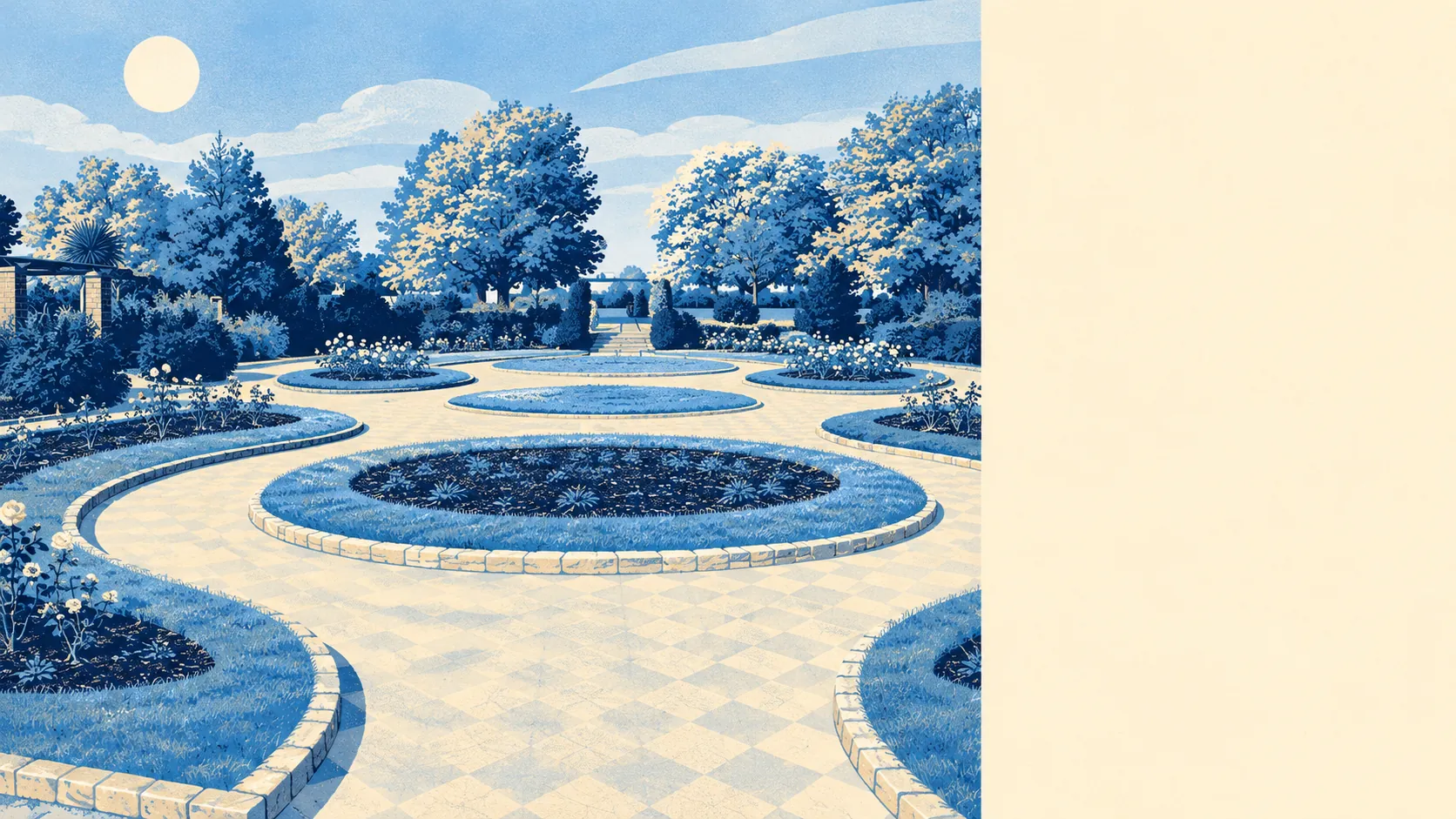
The area around Clayhall is green, and that is its strongest feature. A park or patch of green space is a couple of minutes from most front doors, and there are a couple of dozen within a kilometre. The back gardens are proper ones. The local high street is thin, though, with plenty of shops, one pub and no restaurants on the rating list. Clayhall is built for being outdoors, with very little nightlife.
The average home in Clayhall is roughly 150 metres from the nearest public green space, and about 23 green spaces lie within a kilometre. That makes a park part of everyday life for nearly everyone, without any need to drive to one. Valentines Park is one of the named open spaces in the wider area, and its railings, gates and gatepiers are listed. In Clayhall the nearest green is rarely further away than the nearest bus stop.
Water is a little further off. The average home is roughly 600 metres from a stretch of blue space, and about 11 lie within a kilometre. Ponds and lakes make a destination for a walk rather than a view from the window, and there are enough of them to vary the route.
The National Cycle Network is about 7 kilometres away on average, and no postcode here is close to it. Ancient woodland covers 0% of the area. Getting out into the wider countryside means a deliberate trip, often by car.
The valuation list counts 91 rateable premises in and around Clayhall. Fifty are shops, with one pub, one office and no restaurants. Those are premises on the rating list, which isn't the same as businesses trading this week, but the pattern is clear enough. Fifty shops, one pub and no restaurants make a suburb that pops out for milk and goes home to cook.
The Food Standards Agency has rated 30 local food premises. About 57% hold the top score of five, and about 7% are at the low end of the scale. Thirty premises is a short list, so a handful of results either way changes the percentages quickly.
Fine-particle air pollution across Redbridge averaged about 9 micrograms per cubic metre in 2024. That is a borough-wide figure, and it can't pick out a quiet close from a house on the main road.
The feel of the place is interwar suburbia with a few older survivals. The Claybury and Valentines Mansion conservation areas sit within reach, and Valentines Mansion itself is listed. Barkingside, Gants Hill, Woodford, Fairlop and Hainault are all among its neighbours. Clayhall itself is mostly closes, parades and gardens, and the destinations are mostly next door.
Private outdoor space is generous for London. Clayhall has about 56,000 square metres of garden for every 1,000 residents, and the semis and bungalows that make up much of the housing account for most of it. On top of the parks, most households have their own patch to sit out in. Walk from the actual front door to the nearest park before deciding, because the average distance and the distance from a particular house can differ by a whole street.
No protected landscape overlaps the area. There is no area of outstanding natural beauty, no site of special scientific interest and no ancient woodland. Clayhall's green space is ordinary town parkland, there for dog walks and children's football more than for conservation.
The surroundings are Clayhall's real strength. A buyer gets parks on the doorstep and a garden behind the house, and has to look further afield for an evening out.