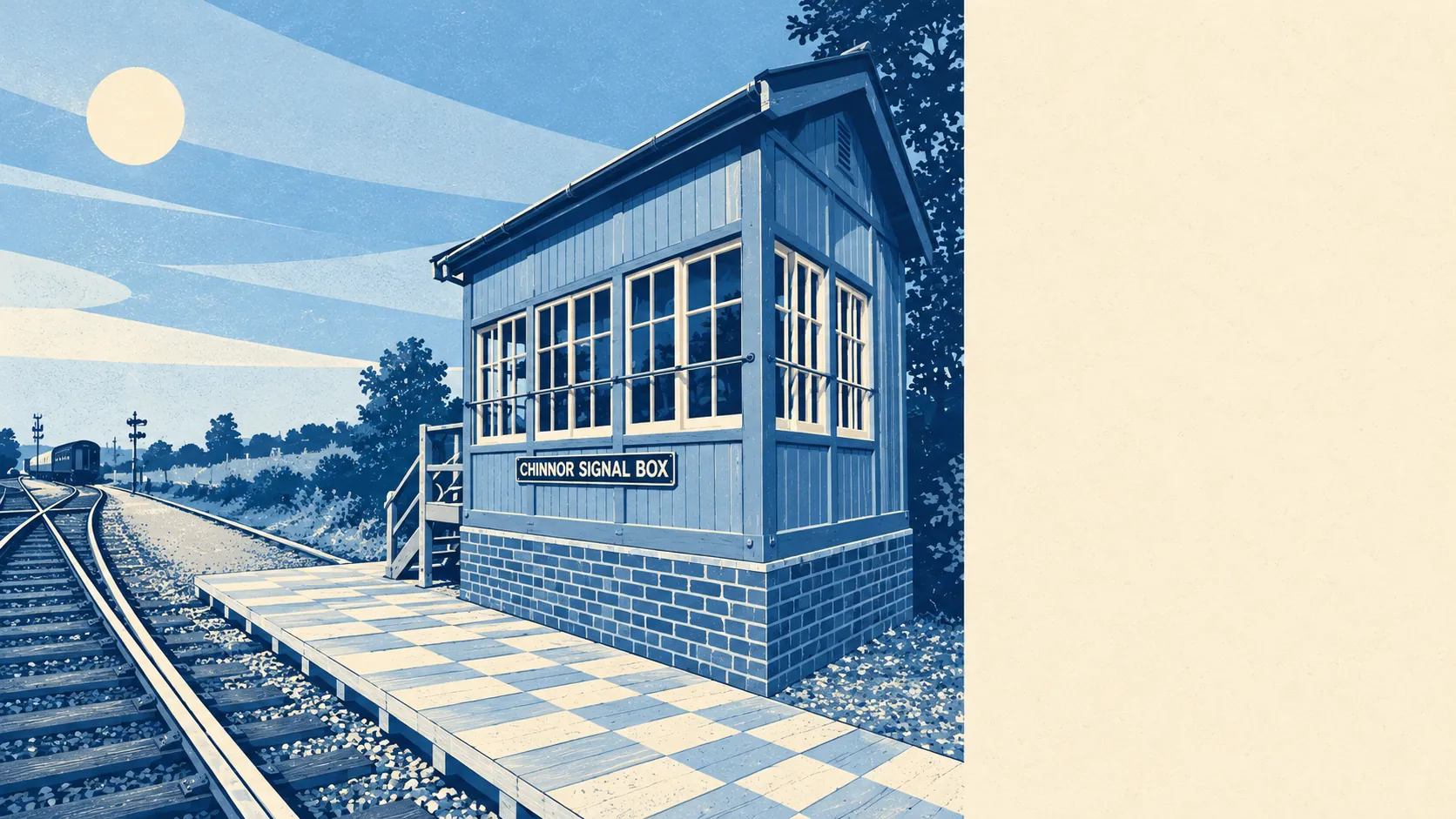
Chinnor is a village people buy into and then decline to leave, and that is most of its appeal. Nearly eight in ten households own their homes. Almost nobody is out of work. Health is good, deprivation is low, and the place still runs its own beer festival to pay for its teenagers. For a buyer, that means neighbours who plan to be around long enough to care what happens next door. The houses carry a price to match, and that is where the shine wears off.
About 78% of households in Chinnor own their home, the median resident is 42, and gross household income averaged about £73,000 in the financial year to March 2023. That figure is the Office for National Statistics' model for the wider neighbourhood before tax, so it describes the area and nobody's actual payslip. The money and the permanence show up in what the village does with its spare time. Chinnor Beer Festival takes over Whites Field off Mill Lane every August bank holiday to raise money for the village's young people, so the adults drink for a cause that is too young to join them.
The cost is the weak side, and it starts high. The Land Registry recorded 84 sales in the twelve months to May 2026, with a median of about £446,500. Detached houses went for around £572,500, semi-detached for £425,000 and terraces for £380,000, so the cheapest kind of house in the village still needs a deposit most first-time buyers spend years saving. Band D is the most common council-tax band, and only about 7% of homes fall in bands A or B. The bottom rung of the ladder is mostly missing.
Renting offers no back door. Typical private rent across South Oxfordshire was about £1,380 a month in April 2026, a district-wide average from the Office for National Statistics' index. Chinnor's own rental stock is small, with about 9% of households renting privately, so the choice is thin even for anyone happy to pay it.
Houses run the place. On the council-tax valuation list, about 30% of homes are detached, 29% semi-detached, 22% terraced and 10% bungalows, with just 9% flats, and only 8% were built before 1930. Most of the homes with an energy certificate went up after the war, and about 63% of certificated homes rate C or better, which is a warmer stock than the village's spot on the Icknield Way might suggest. About 79% heat with mains gas. The old village is the garnish and the estates are the meal.
None of Chinnor falls inside the Environment Agency's river-and-sea flood zones. Surface water is a different measure, and once it is counted about 7% of postcodes carry a high reading on at least one flood indicator, 8% medium and 33% low. A spring-line village was built where water comes out of the chalk, and the low-risk mapping is mostly about rain running off the hill, though individual streets differ.
Getting anywhere is a car job. At the 2021 Census about 51% of working residents drove to work, 39% worked from home and 1% went by train, with Princes Risborough the nearest station. Chinnor has 39 bus stops averaging about 13 weekday departures each, and only 14 of them see a weekend service. The Department for Transport's 2019 model put the nearest town centre about 14 minutes away by car and 27 by public transport, and bus routes have had seven years to change since. Gigabit broadband reaches about 94% of premises. For two-fifths of the working village, the fibre is the commute.
Thames Valley Police recorded a crime rate of about 40 per 1,000 residents in Chinnor in the year to May 2026, roughly 18% below the South Oxfordshire average.
Historic England lists 29 buildings in the area, one at Grade I and 28 at Grade II, and two conservation areas, Chinnor and Oakley, cover parts of it. Inside those boundaries, new windows, extensions and anything visible from the street mean more paperwork and more patience. Most of the post-war closes fall outside them and go through ordinary planning.
Green space is about 140 metres from the average front door, with water about 490 metres off, and the Chiltern escarpment climbs up behind the village. This page also covers Crowell, Emmington, Kingston Blount and Sydenham, smaller places strung along the same Icknield Way country, where the hill is the view and the village shop is somebody else's.
The village has a decent cast list for its size. Adam Clayton, the U2 bassist, was born here in 1960. Bill Giles, once a national television weather presenter, lives here. The composer Freda Swain and her husband, the pianist Arthur Alexander, shared a bungalow on Chinnor Hill, and the swimmer Simon Burnett grew up in the village. The silver band, founded around 1850, was there before any of them.
Chinnor is right for families and couples who drive or work from home, want their own front door with a garden, and like the idea of neighbours who will still be there in ten years. Look elsewhere if you need a station within walking distance, a cheap first flat, or a landlord with options.
The community is what the money buys here: owners who stay, a band older than most of the houses, and a festival that funds the next generation. Joining costs South Oxfordshire prices for a village with one bus route that matters, and the entry-level house still costs £380,000. Chinnor is better than a commuter village has any right to be, and dearer than most buyers hope.