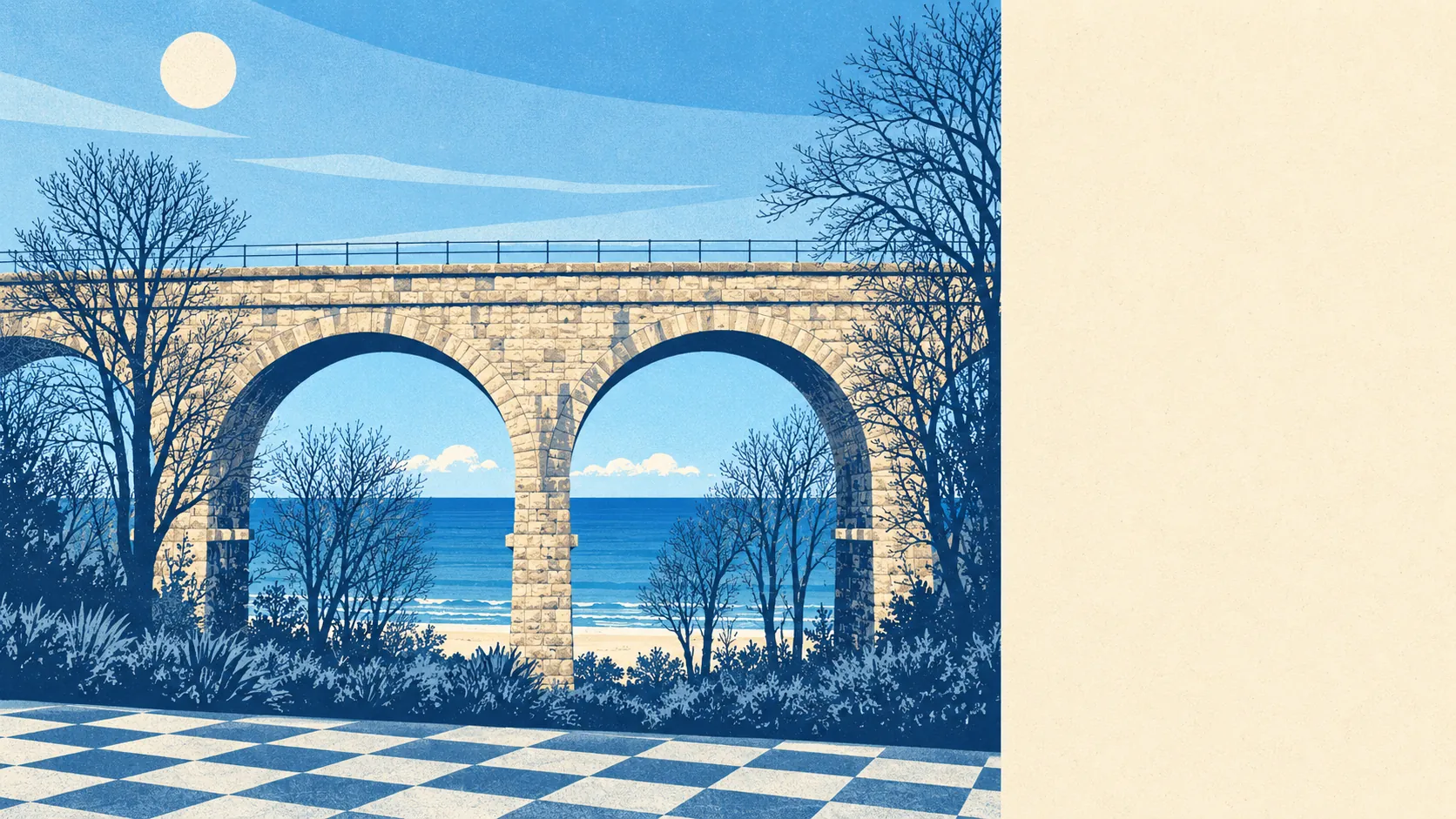
Green, wet and busier with footpaths than with anything else. Open space starts within a couple of hundred metres of most front doors. Water is barely further. The gardens are enormous by any urban standard, and the high street is mostly shops rather than offices. This is countryside with a beach attached, not a resort with countryside behind it.
Public green space is about as close as it gets. The average postcode here sits roughly 190 metres from open space, with around eight separate areas inside a kilometre. That is not one park doing all the work, it is a network, which is the difference between a nice view and somewhere you actually walk on a Tuesday in February.
Water is the same story. Blue space averages about 560 metres away, with roughly ten bodies of water within a kilometre. In a place built along a bay with the Hayle estuary round the corner at Lelant, that number describes something real rather than a statistical curiosity.
The National Cycle Network is less generous, averaging about 3.2 kilometres away, with no postcodes here counted as close to it. There is no ancient woodland recorded in the area at all. Cornwall's landscape does a lot of things well; deep old woodland on an exposed north coast is not one of them.
On amenities, the area carries around 254 shop premises, 26 restaurants and 14 pubs, alongside roughly 47 offices. That ratio is the giveaway. Places with more shops than offices are places where the economy happens in front of you rather than behind a glass door, and where the working day is shaped by visitors more than by commuters.
Air quality is good. Fine particle levels across the Cornwall council area averaged about 5.1 micrograms per cubic metre in 2024, which is low by English standards and a straightforward consequence of sitting on the Atlantic edge with the wind coming in off the sea.
The character of the surrounding area is villages and high ground rather than suburbs. Lelant sits on the estuary with its church and golf links, and beyond it the map runs quickly into Towednack, Nancledra, Cripplesease, Canon's Town and Lelant Downs, all of them small. Trencrom Castle, the hilltop enclosure inland, and Knill's Monument on Worvas Hill are the two landmarks that orient everything from a distance. Walk twenty minutes in most directions from the bay and you are in farmland with a sea view.
Private outdoor space is the underrated part. Gardens here amount to roughly 217,000 square metres per thousand residents across the area, which is what a landscape of bungalows and detached houses on generous plots actually looks like when measured. Most homes have proper gardens, not yards.
The valuation list records 371 rateable premises across the area, with one category accounting for 327 of them. These are premises on a list rather than businesses currently trading, so the total describes the building stock available for commercial use, not what is open this morning.
Eating out is unusually reliable. All 17 food premises with a published hygiene rating hold the top score, and none sits at the bottom of the scale. A clean sweep across a list that size is worth noting, because it almost never happens.
One honest absence: no part of this area falls inside a national landscape, a site of special scientific interest, or ancient woodland. The land here is attractive without being designated, which means the views are not protected by anything more durable than the planning process and the terrain itself.
The surroundings are the single best thing about living here, and the easiest to verify: you can stand on the sand, look up at farmland, and see the whole argument in one go.