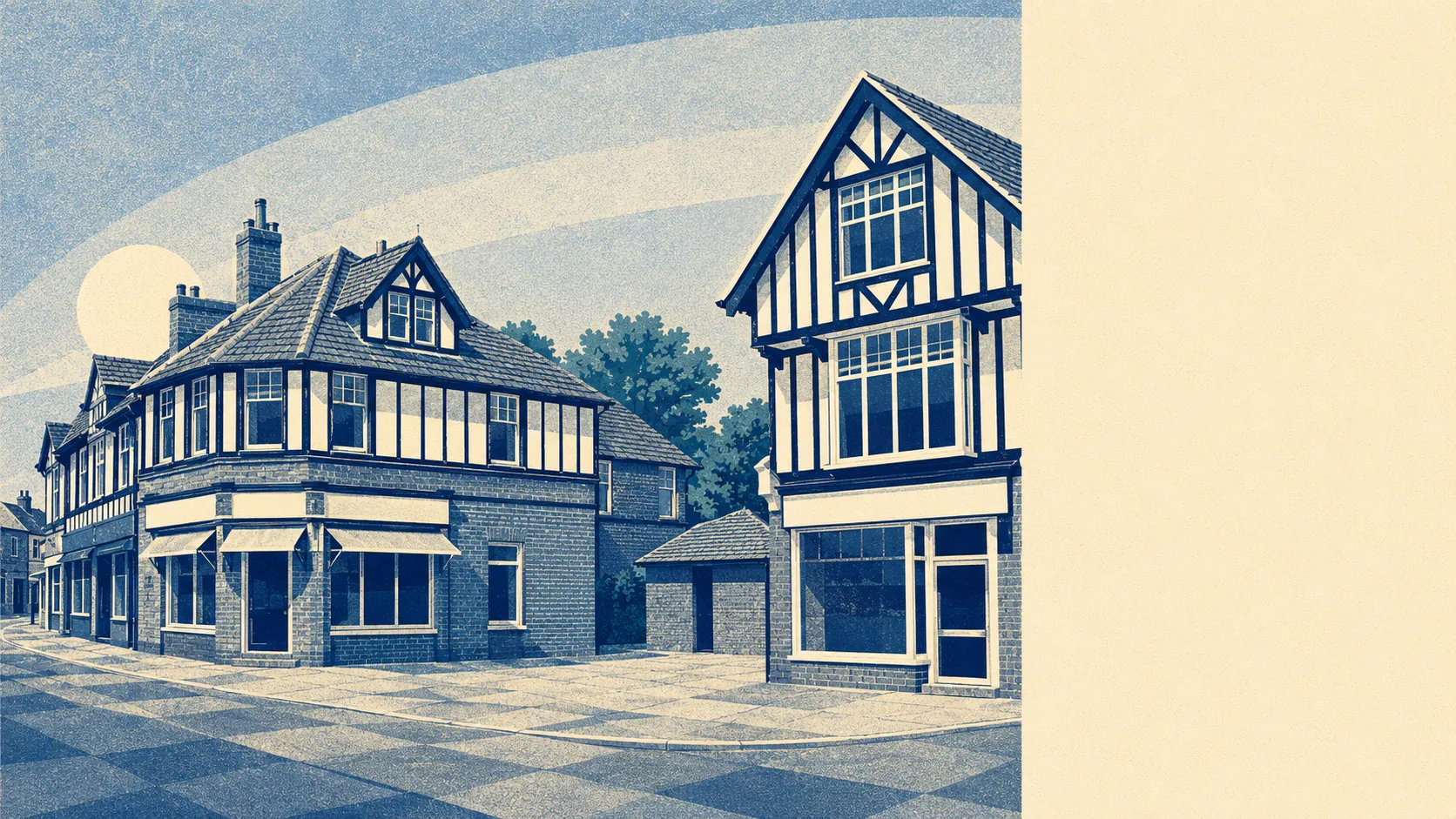
Brockenhurst is a retirement village that hasn't admitted it yet. The median resident is 55. The typical house costs £820,000. Nearly half the people who work do it from home, so the station that made the place barely gets used by the people living around it. Southampton is thirteen miles one way and Bournemouth fifteen the other, but that misses the point. This isn't a commuter town on the edge of the New Forest. It's the New Forest, with a railway line bolted on.
Seven in ten homes here are houses, most of them detached, and only about one in six is a flat. The stock leans post-war, though a quarter of it went up before 1930, which is where the timber, the low ceilings and the heating bills come from. Four in ten homes carry an energy rating of D, and one in six sits at E or worse. Only a bit over four in ten manage a C or better. The setting is the draw. So is the cost of keeping a draughty pre-war house warm through a wet Hampshire winter.
This is where Brockenhurst stops being pretty and starts being expensive. The typical sale over the past year landed at £820,000, and it came off just 53 transactions, so the market is thin as well as dear. A detached house runs to just over a million. A terrace still asks around £540,000. A flat, the cheapest way in, sits near £200,000. The most common council tax band is G, near the top of the scale, and barely one home in eight falls into the two cheapest bands. If you came looking for value, you came to the wrong forest.
Renting doesn't rescue you either. Across the wider New Forest area the typical private rent is about £1,240 a month, and Brockenhurst sits at the pricier end of that district rather than the cheap end.
On crime, the village is unremarkable in the good way. The published rate is about 55 offences per 1,000 people a year, which works out roughly 5% below the New Forest average and, in practice, bang on the district norm. Nothing in the numbers suggests you need to think twice about walking home.
Brockenhurst Rail Station is the one genuine trump card, a junction on the main line with direct trains to London Waterloo, Southampton and Bournemouth. And yet only about one worker in forty commutes by train, because half the working population never leaves the house to work at all, and a third still drive. More than half of households run two cars or more. The broadband backs the stay-at-home life up: gigabit service reaches 95% of the village and superfast covers virtually everything. The internet here is faster than the bus, which almost nobody catches.
The trade-off for living inside a forest is water. Around 18% of postcodes carry a high surface-water flood risk, roughly 7% have flooded at some point on record, and about 3% sit in the Environment Agency's highest river-flood zone. The upside is greener than almost anywhere: open space is a couple of hundred metres from the average front door, with around ten separate patches within a kilometre, and the ponies treat the village as an extension of the common. You are never far from grass. Occasionally the grass is under water.
The village carries 28 listed buildings, one of them grade II*, and two conservation areas covering Brockenhurst itself and The Weirs. The history is dense for a place this size. The Balmer Lawn Hotel was a divisional headquarters in the Second World War, where Montgomery and Eisenhower held meetings while planning the Normandy landings. All of that heritage is part of what you're paying for, but it comes with a caretaker. Want new windows, a larger extension or solar panels on a prominent roof inside those boundaries, and the council has firm opinions about all three. Computer says no is a real risk here.
The result is a settled, moneyed, older village. Around 78% of homes are owner-occupied, the typical resident is in their mid-fifties, and household income sits near £64,500 a year. This is a place people move to and stay, which is lovely if you are one of them and quietly frustrating if you are a thirty-something trying to buy in.
This page also covers Beaulieu, the estate village to the south-east that hosts Palace House and the National Motor Museum, and shares Brockenhurst's mix of forest, heritage and price.
Brockenhurst suits people whose lives don't depend on a cheap house, a fast daily commute or a lively night out. Retirees, remote workers who already banked the deposit, and families who rate open forest over a fast school run will get exactly what they came for and rarely regret it.
It suits almost nobody buying a first home on a single salary, anyone who needs to be at a London desk five days a week, or anyone hoping to make money on a bargain. The prices don't flex and the good stock rarely comes up.
Overall Brockenhurst rates as average, a three out of five, and that average hides a wide split. The community scores top marks, a five: safe, settled, prosperous, healthy and about as far from deprived as England gets. Value drags it back down to the floor, a flat one out of five, because you pay a forest premium for the privilege of living in one. Brockenhurst is a good place to live, as long as you can afford to have already stopped worrying about the price. If you can't, the New Forest will still be there to visit.