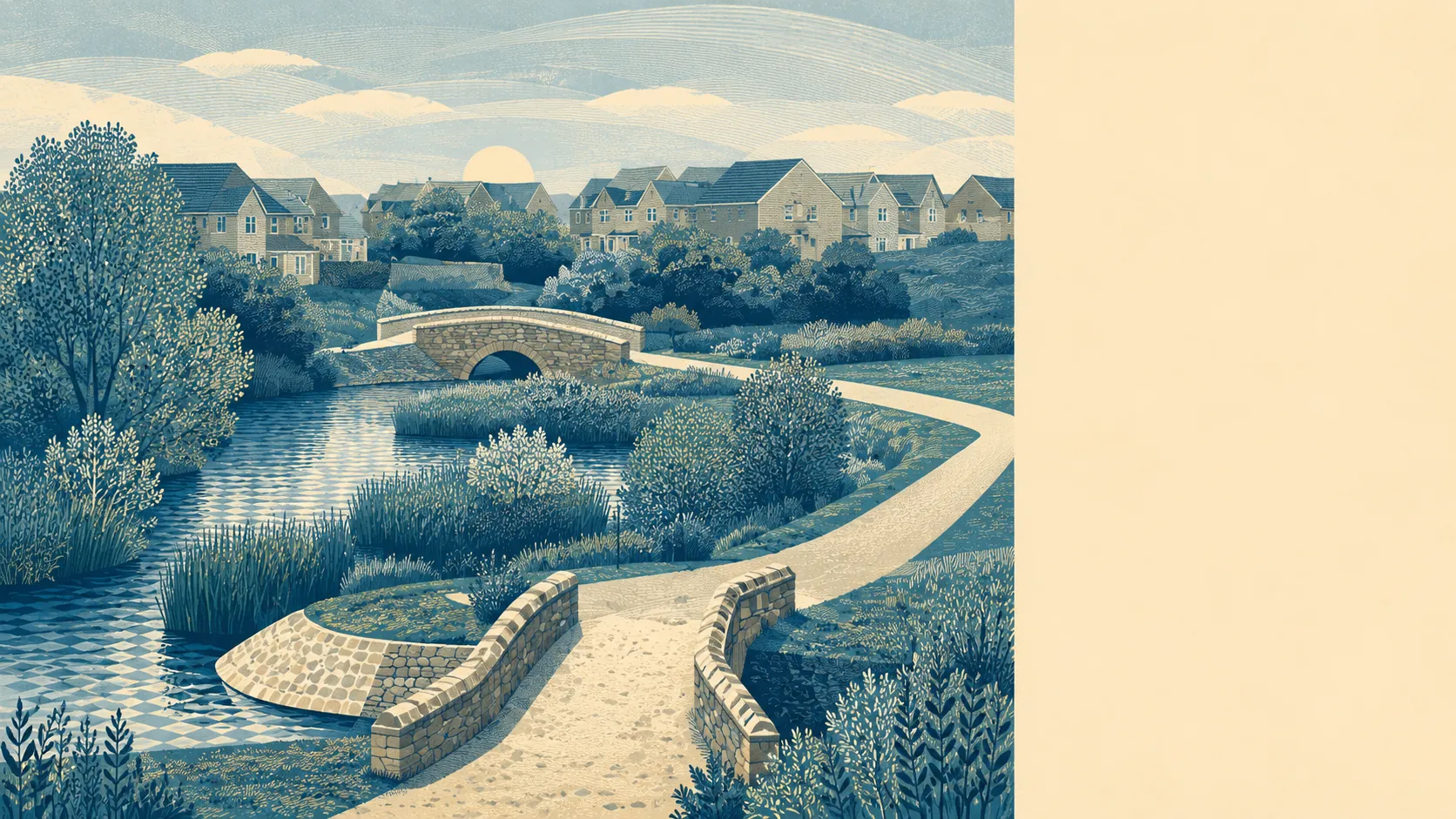
Bradley Stoke spent the early nineties being called Sadly Broke. Homes stuck in negative equity. No town centre, just a Tesco. A reputation as one of Europe's largest soulless housing estates. Thirty years on the nickname has worn out, because the numbers stopped agreeing with it.
Nearly every home here went up between the early eighties and the early two-thousands, which makes Bradley Stoke almost the opposite of the Victorian-terrace towns nearby. Eight in ten properties are houses. About one in six are flats. Barely anything predates 1930. The energy ratings follow the build date: just over half the stock sits in the top energy bands of A to C, nearly four in ten land at band D, and only a small share fall to E or worse. Modern brick does what old brick can't, which is stay warm without bankrupting you.
The typical home sold for around £330,000 over the past year, across about 300 sales, so this is a place where things actually change hands rather than sit. What you get for that splits hard by type. A detached house runs to about £495,000. A semi sits around £335,000. A terrace comes in near £290,000, and a flat around £198,000. Council tax lands low for the region: the most common band is B, and nearly half of all homes sit in band A or B. For a suburb people once mocked, the entry price is friendlier than most of Bristol's northern edge.
Renting is the minority sport here, with about two thirds of homes owner-occupied. Across the wider South Gloucestershire area the typical private rent runs to about £1,450 a month. That is the district figure rather than Bradley Stoke's own, so treat it as the regional weather, not the local forecast.
Recorded crime runs at about 76 offences per thousand people a year, which lands roughly six per cent below the South Gloucestershire average. That is the published rate, not a back-of-envelope sum. In plain terms, Bradley Stoke is a shade safer than the county it sits in, which is what you'd expect from a place built around cul-de-sacs and school runs rather than a nightlife strip.
The train is where the estate shows its age. Almost nobody commutes by rail, and the reason is geography: Bradley Stoke has no station of its own. Bristol Parkway sits to the south and Patchway to the west, both close enough to use and neither actually yours. About four in ten people work from home, and a similar share drive, which tells you how the place really moves. Broadband makes up for the rails: gigabit lines reach about four in five postcodes, and near enough every home can get superfast. If your commute is to a spare bedroom, Bradley Stoke is built for you.
Flood risk is the one number that refuses to flatter the place. River and sea flooding is a non-issue, touching under one per cent of the ground. Surface water is the catch: roughly a third of postcodes carry a high flag for it, the legacy of a flat, heavily built estate where rain has to go somewhere. It is worth a drainage check on any specific street before you sign. What the estate got right is green space. The average home is a few minutes' walk from a park or green, with over a dozen within a kilometre, plus the woods the developers left standing, Savage's Wood among them. For a place designed by housebuilders, the greenery survived better than the town centre did.
If you want to knock a wall through, Bradley Stoke is one of the easiest places around to do it. Five listed buildings sit in the wider area and two conservation areas, at Lower Almondsbury and around Church Lane in Winterbourne, both on the fringes rather than in the estate itself. The bulk of the housing carries no heritage protection at all, which means extensions, loft conversions and new windows are a matter of building regulations, not a fight with a conservation officer.
This is a settled, comfortable, middle-income suburb and the figures say so plainly. About two thirds of households own their homes. The typical resident is 38, squarely family age. Household income runs to around £68,000, above the national middle, which is the quiet engine under the low crime and the full primary schools. Nobody moves to Bradley Stoke for edge. They move here because the sums work and the streets are calm.
It suits a particular buyer well. If you want a modern, warm, low-maintenance house with a garden and a driveway, within a short school run and a work-from-home commute, this is close to the platonic version of that. Families chasing space over character get more of both here than in the older suburbs, at a lower council tax band.
It suits others badly. If you want a period house, a walkable high street full of independents, or a train you can catch without a lift or a car, Bradley Stoke will frustrate you. The place was planned, not grown, and it still reads that way. People who need a town centre with a pulse tend to leave within a couple of years and buy nearer Bristol proper.
Overall Bradley Stoke scores above average, and the shape of that score tells the real story. Its strongest suit is the community itself: prosperous, low-crime, well-schooled, the sort of place that quietly clears the bar on almost everything. Its weakest is flood, dragged down by surface-water risk that a drainage survey should settle street by street. The estate that got called Sadly Broke turned out to be one of the safer bets on the northern edge of Bristol. The joke didn't age well. The houses did.