Amersham is full of healthy, well-educated, well-paid people, and the house prices are how it stays that way. More than half the adults hold a degree. Almost nobody is out of work. The typical home sells for about three-quarters of a million pounds, and the most common council tax band is G. Lovely neighbours, very expensive membership.
Down at street level, about 73% of households own their home and the median resident is 45. The Office for National Statistics models gross household income at about £76,000 across the area for the financial year to March 2023. On the government's deprivation index the town averages close to the least deprived tenth of England, and about 89% of residents call their own health good or very good. Halma, the hazard-protection firm, keeps its headquarters in Old Amersham, so even the local employer specialises in keeping people safe from things.
The Land Registry's last twelve months, to May 2026, put the typical sale at about £743,000 across 140 sales. Detached houses went for about £973,000, flats for about £344,000, terraces for about £605,000 and semis for about £810,000. The council tax list leans the same way: band G is the most common, and bands A and B together cover only about 8% of homes. In most towns the semi is the sensible compromise. Here it costs £810,000.
Renting gets priced at county level. Buckinghamshire as a whole has a typical private rent of about £1,470 a month as of April 2026, up 5% on a year earlier, and that figure blends Amersham with every cheaper town in the authority. Only about 15% of households here rent privately, so the county average is speaking on behalf of a fairly small local market.
The housing is mostly houses, and big ones. Of every home on the council tax list, about 29% are detached, 24% semi-detached, 19% flats, 17% terraced and 9% bungalows, and only about 19% were built before 1930. Amersham-on-the-Hill was called Amersham Common until the railway arrived in 1892, after which the architect John Kennard did much of the early building and the post-war decades filled in the rest. About 80% of homes run on mains gas and about 7% heat on electricity alone. Of the homes with an energy certificate, about 48% are rated A to C and about 13% E or worse.
Crime is low for the county. Thames Valley Police's published figures give Amersham about 49 recorded crimes per 1,000 residents in the year to May 2026, about 25% below the Buckinghamshire average of 65. Burglary makes up about 7% of the local total, against about 4% across England and Wales. Across its whole force area, Thames Valley Police charged someone in about 9% of cases over the same year, against about 12% nationally.
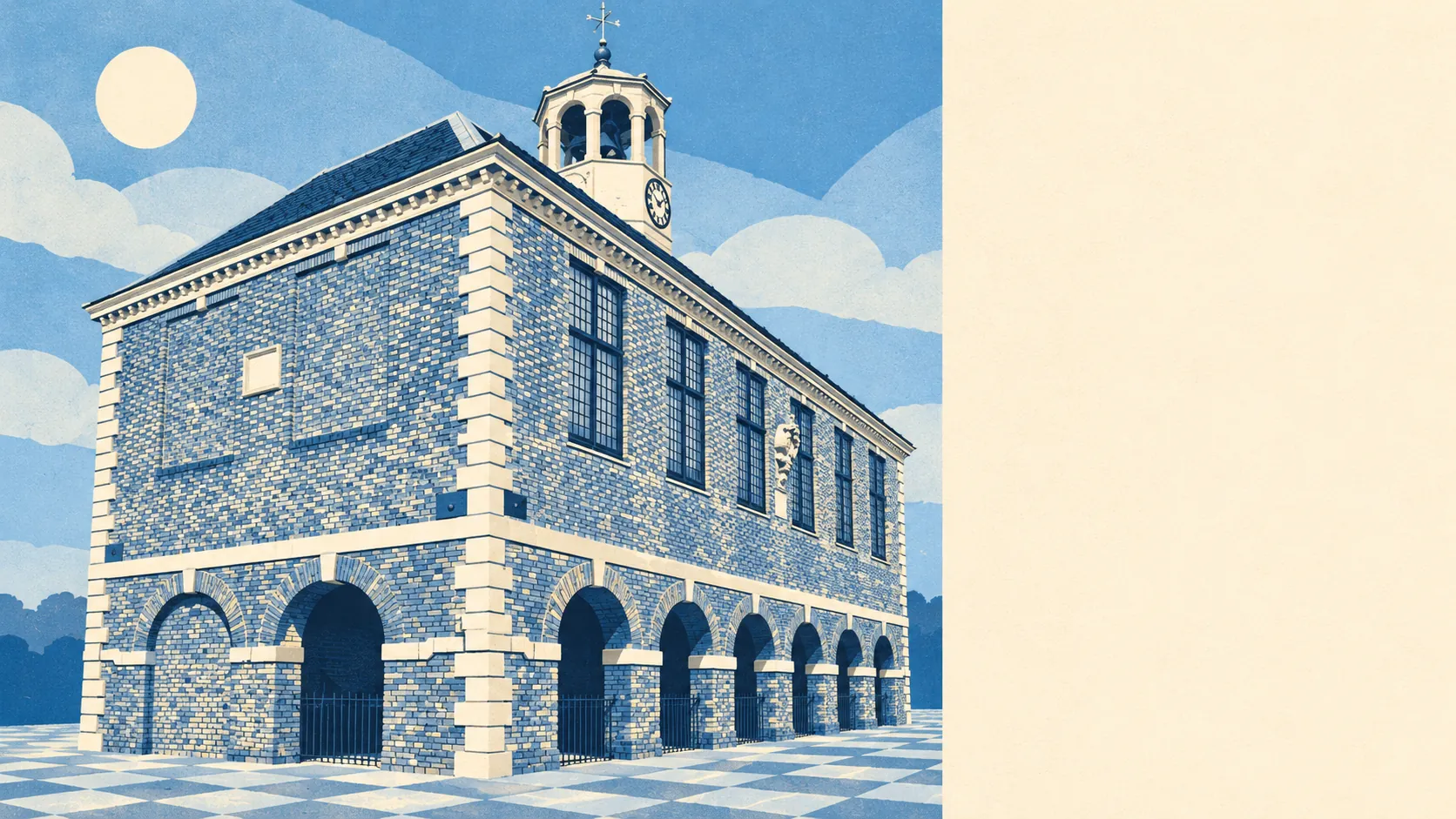
The town is thick with heritage. There are 210 listed buildings, one at grade I, eight at grade II-star and 201 at grade II, and four conservation areas: Amersham, Chesham Bois, Elm Close and the Weller Estate. That covers the Market Hall and the Kings Arms Hotel, which nobody would expect to escape, and also High and Over, the modernist house in Highover Park. Windows, extensions and front walls in those streets go through the council first, and the modernists get the same treatment as the coaching inns.
Flood risk depends on which measure you read. On this site's postcode indicators, which include surface water, about 8% of Amersham's postcodes carry a high risk on at least one indicator and about 11% a medium one. The Environment Agency's river-and-sea flood zones are narrower: about 3% of the area is in zone 2 and under 1% in zone 3. The River Misbourne is a chalk stream that dries up from time to time, so most of the water to worry about arrives from the sky.
Amersham Rail Station is the end of the Metropolitan line, and Chiltern Railways run through it to Marylebone. Even so, at the 2021 census about 54% of working residents worked from home, about 31% drove and about 2% took the train. John Betjeman put the town in his 1973 film Metro-land, and half the people it was made about have since logged off. Gigabit broadband reaches about 79% of premises and superfast about 99%. There are 99 bus stops, averaging about 44 weekday departures each.
The schools are strong, and the system is selective. Ofsted rates 80 of the 94 graded settings across Buckinghamshire good or outstanding, a county-wide count. Across the 12 primaries in the town's postcode districts the average maths score at the end of primary school is about 108, and the four secondaries average about 70 on Attainment 8, the government's measure of results across eight subjects at sixteen. Dr Challoner's Grammar School takes boys, Amersham School is the non-selective academy, and Dr Challoner's High School and Chesham Grammar School both draw from the town. Elangeni School, Chestnut Lane School and Chesham Bois Church of England School cover the younger end. The grammar school started in Old Amersham in 1624 and moved up the hill in 1905, following everyone else.
Green space is close. The average home is about 250 metres from a park or open space, with about 10 within a kilometre, and water of some kind is about 480 metres away. The Chilterns Area of Outstanding Natural Beauty brushes the edge of town, and the page also covers the villages of Hyde Heath and Winchmore Hill out among the fields. Val Biro, the illustrator, lived at 95 High Street, and the old town still looks drawn more than built.
Amersham is right for families who can afford a house with a drive, want strong schools and a low crime rate, and work from home most days with the Tube in reserve. Anyone hoping to get in cheaply, or wanting a busy town with life after nine, should look elsewhere.
Amersham is better than average, and the reason is the people living in it: educated, healthy, employed and rarely in trouble. The catch is that you have to buy your way in among them, and at these prices that takes a lot of buying.