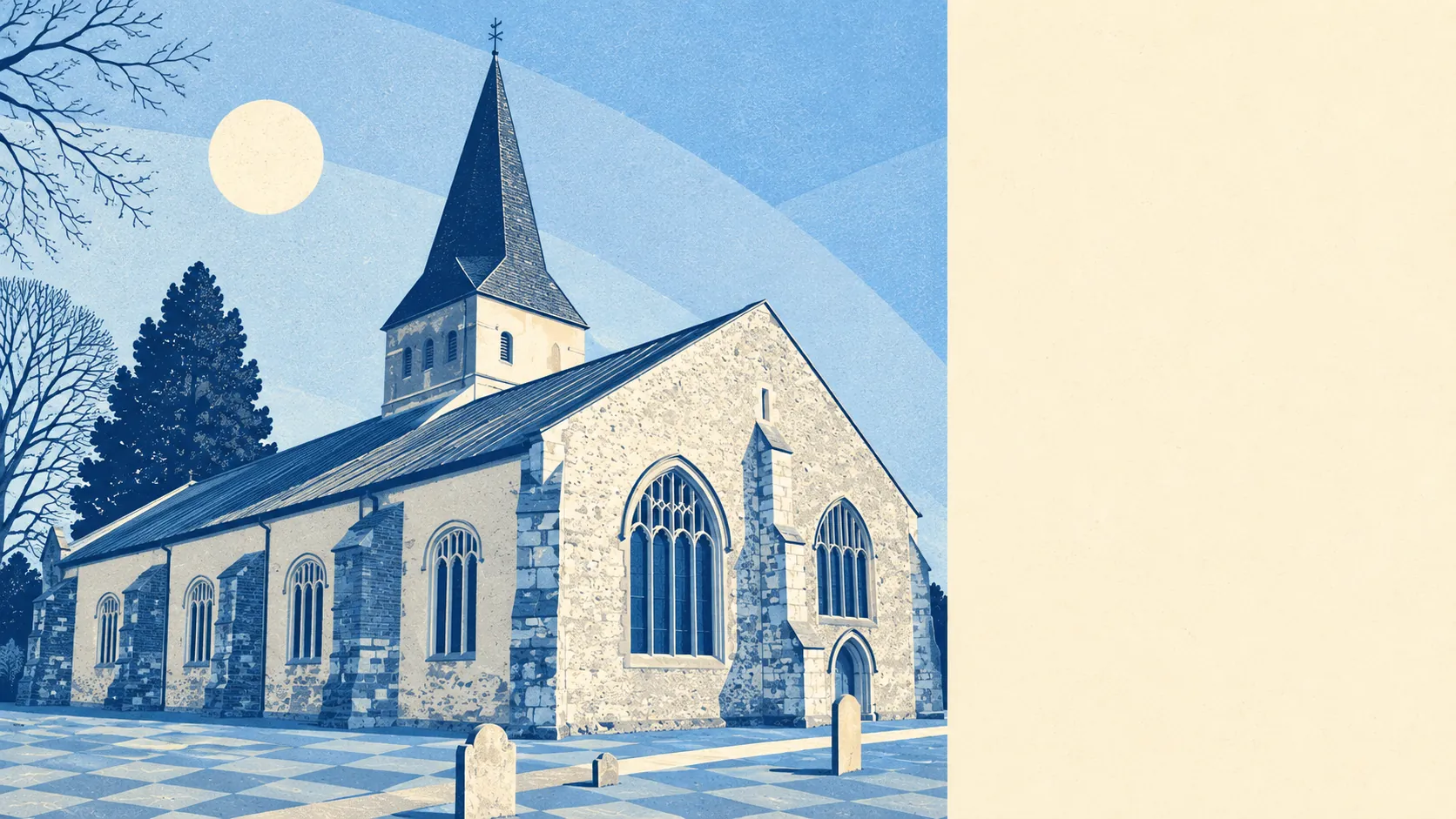
Green on every side, and closer than most towns bother to manage. The nearest green space is barely past the garden gate. There is water within a short walk. The gardens are big enough to lose a football in. Here the countryside is simply what surrounds the town, not a weekend outing.
Green space is part of everyday life here. The nearest green space averages roughly 150 metres from home, and the typical address has about 17 of them within a kilometre. Most towns count their parks. Alton could count its parks and still have a few left over for the dog.
Water isn't far off either. The nearest river, pond or stream averages about 400 metres away, with around 39 bodies of water within a kilometre. The River Wey rises in the town, which means the water is small, close and mostly the kind you walk beside rather than sail on.
The National Cycle Network averages about 370 metres from home, and about 68% of postcodes sit close to it. That puts a signed cycle route near most front doors, whether or not anyone in the house owns the Lycra to go with it.
On the rated-premises list, the town has 225 shops, 28 pubs and 11 restaurants. The balance tells you what sort of evening Alton expects: a drink is easy to find, a table for dinner takes a little more planning. The high street is built for errands and a pint rather than a tasting menu.
Air quality is good. Fine-particle pollution across the East Hampshire council area averaged about 6 micrograms per cubic metre in 2024. That is a council-area figure, not a reading from any particular street.
Around the edges, the character is older than it looks from the ring road. The conservation areas at Alton, Anstey, Holybourne and The Butts hold the historic fabric. Out in the fields there is the Roman settlement at Cuckoo's Corner near Neatham, a Roman villa south-west of Wyck Place and a hillfort on King John's Hill, all scheduled monuments. Chawton, with Jane Austen's House, lies in the surrounding patch, and Selborne sits just inside the South Downs National Park, outside this area's own boundary. Brockham Hill rises north-east of the town. The industrial estates at Mill Lane, Newman Lane, Caker Stream and Omega Park handle the working side, away from the old core.
Gardens are generous. The town has about 213,000 square metres of private garden for every 1,000 residents. That is a measure of outdoor space people actually own, and in Alton the answer is plenty. The lawnmower is less a tool than a household member.
The business rating list has 653 rateable premises. The largest group is 189 in the core shop category, followed by 106 offices, 96 in an industrial category and 33 warehouses, with smaller groups after that. These are premises on the valuation list, not a count of businesses open today. The mix still says something: a working town with a real industrial side, not a commuter dormitory with a coffee shop bolted on.
Eating out is clean. Of 123 food premises with a hygiene rating, about 76% hold the top score of five, and about 2% sit at the bottom of the scale. Most of what is on offer is prepared by people who read the guidance and apparently enjoyed it.
No protected-landscape designation overlaps the area itself. There is no area of outstanding natural beauty, no site of special scientific interest and no ancient woodland inside the boundary. None of that is a fault. It means the green on your doorstep is working countryside and ordinary parkland, which is easier to live beside than a landscape with its own rulebook.
The surroundings are one of Alton's real strengths: parks, water, cycle routes and your own garden all within reach before anyone needs to find the car keys.